eSIM vs Local SIM in Thailand (2026): Which Is Better for Tourists and Expats?
The eSIM vs local SIM in Thailand question comes down to how long you stay and whether you need a Thai phone number. For holidays and the first weeks of a move, a travel eSIM is faster and easier. For long stays, a Thai SIM from AIS or True is usually cheaper per gigabyte and gives you a local number for banking and deliveries.
This guide compares the two on price, setup, coverage and everyday use, so you can pick the right option before you land at Suvarnabhumi or Phuket. Many expats end up using both, and we explain how that works too.
eSIM vs Local SIM in Thailand: The Quick Answer
Choose a travel eSIM if you are visiting for up to a few weeks, want data the moment you land, or need to keep your home SIM in the phone for bank codes. Saily starts at US$2.99 for 1 GB in Thailand, and Holafly offers unlimited data priced per day.
Choose a local Thai SIM if you are staying for months, use a lot of data every day, or need a Thai number for a Thai bank account and local apps. Thai prepaid and postpaid plans offer large data allowances at low monthly prices.
Use both if you are moving to Thailand. Start with an eSIM for the first weeks, then add a Thai SIM once you have an address and a bank account.
What Counts as a Local SIM in Thailand?
Thailand has two main mobile operators: AIS and True, which merged with dtac in 2023 and still sells under both brands. They sell tourist SIMs at airport counters, and regular prepaid SIMs at their shops, in shopping malls and at many convenience stores.
Every Thai SIM must be registered to your passport, and staff usually take a photo of you during registration. Both operators now offer Thai eSIMs too, but you still need to register them with your passport in a shop or through the operator’s app.
A travel eSIM from Saily or Holafly is different. You buy it online, install it at home, and it connects to a Thai partner network without any local registration.
eSIM vs Local SIM in Thailand: Price
For a short stay, the price gap is small. Airport tourist SIMs bundle data for a fixed number of days, and they usually cost more than the same SIM at a shop in town.
Saily lets you buy only the data you need, starting from 1 GB for US$2.99, which suits light users on a short trip. Holafly costs more per day but removes data limits, which helps if you stream, video call or work from your phone.
For stays of several months, a local Thai SIM wins on price. Monthly Thai plans include large data allowances, and some offer unlimited data at reduced speeds, for less than most travel eSIMs charge for a month.
| Factor | Travel eSIM | Local Thai SIM |
|---|---|---|
| Setup | Online, before you fly | In a shop or at the airport |
| Registration | None in Thailand | Passport and photo |
| Thai Number | No (data only) | Yes |
| Best For | Holidays and first weeks | Long stays and residents |
| Cost on Long Stays | Higher | Lower |
| Keeps Home SIM Active | Yes, on dual-SIM phones | Only with a dual-SIM phone |
eSIM vs Local SIM in Thailand: Setup and Convenience
This is where a travel eSIM clearly wins. You install it at home over WiFi, switch it on after landing, and walk straight past the airport SIM counters.
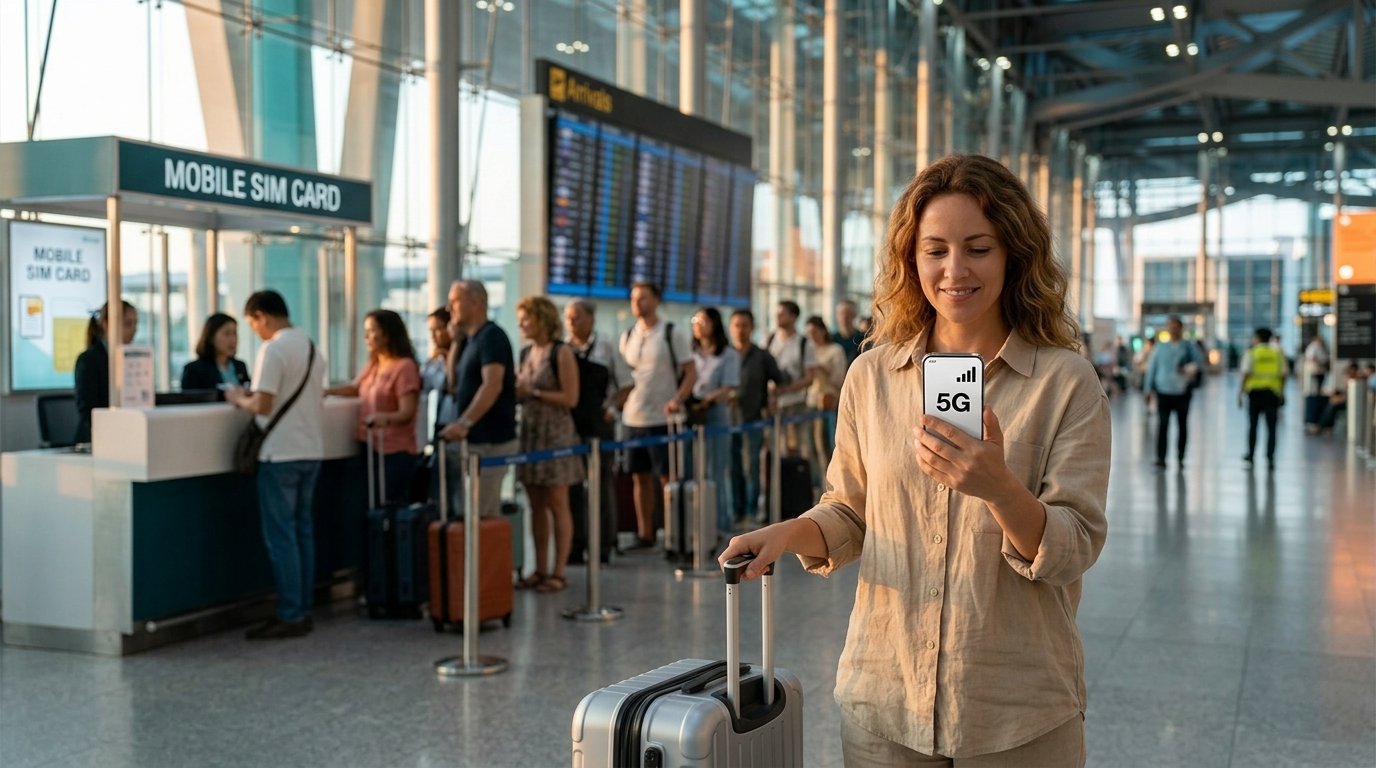
Airport SIM counters at Suvarnabhumi and Don Mueang can have long queues when several flights land at once. You also need your passport ready and time for the staff to register the SIM and set up your phone.
A travel eSIM also keeps your physical home SIM in the phone. That matters for UK bank codes, and our guide to keeping your UK number abroad explains the dual-SIM setup step by step.
Coverage and Speed: eSIM vs Local SIM in Thailand
Coverage is usually the same, because travel eSIMs connect to the Thai networks run by AIS and True. You get 4G in almost every town and on the main islands, and 5G in Bangkok, Chiang Mai, Phuket, Pattaya and other large cities.
Local SIMs can have a small speed advantage, because some travel eSIMs route data through their home country. In daily use for maps, messaging and video calls, most travellers do not notice the difference.
On remote islands and in mountain areas of the north, speeds drop on every network. Check your provider’s coverage list if you plan to stay somewhere rural.
Do You Need a Thai Phone Number?
A travel eSIM gives you data only, with no Thai number. For a holiday that is fine, because Grab, WhatsApp, LINE and most booking apps work with your home number.
Long-stay expats usually need a Thai number sooner or later. Thai banks ask for one when you open an account, and PromptPay, the national instant payment system, is linked to a Thai number or ID.
Landlords, condo offices, delivery riders and local clinics also prefer a Thai number for calls and texts. This is the strongest reason to add a local SIM once you settle.
Saily for short trips, Holafly for unlimited data on longer stays
eSIM vs Local SIM in Thailand: Which Should You Choose?
Tourists on a Two-Week Holiday
A travel eSIM is the simpler choice. You avoid the airport queue, keep your home SIM active and pay only for the data you need.
Digital Nomads Staying One to Three Months
This is the closest call in the eSIM vs local SIM in Thailand debate. Holafly’s unlimited data is easy for heavy users, while a Thai monthly plan is cheaper if you are happy to register a SIM in a shop.
Many nomads use a travel eSIM for the first week, then switch to a Thai plan once they know where they are staying.
Retirees and Long-Stay Expats
A local Thai SIM is the better long-term choice for price and for a Thai number. Keep your UK SIM in the phone as a second line for bank codes, and use a travel eSIM for trips to neighbouring countries.
Our guides for British expats in Thailand and retiring to Thailand cover the rest of the setup, from banking to health cover.
The Best of Both: Using an eSIM and a Thai SIM Together
Most modern phones support two lines at once, and many support one physical SIM plus one or more eSIMs. That gives you flexible options for a move to Thailand.
A common setup is to keep your UK SIM as the physical card for calls and bank codes, and use a travel eSIM for data on arrival. Once you settle, add a Thai eSIM or replace the travel eSIM with a Thai plan.
Check how many SIMs your phone can run at the same time before you buy. Our eSIM not working abroad guide helps if a line does not connect after you switch.
eSIM vs Local SIM in Thailand for Trips to Neighbouring Countries
Many expats in Thailand take regular trips to Vietnam, Cambodia, Laos, Malaysia or Bali, often for visa runs or short holidays. Roaming on a Thai SIM in these countries can be expensive, and roaming packages vary a lot between plans.
This is where the eSIM vs local SIM in Thailand comparison turns into a combination. Keep your Thai SIM for your Thai number, and add a travel eSIM for each trip abroad. Both Saily and Holafly sell regional Asia plans, which saves you buying a new SIM at every border.
Install the trip eSIM at home in Thailand before you leave, and switch your data line after landing. Your Thai number stays active for bank codes and messages while you are away.
Security Tips for Mobile Data in Thailand
Thailand has frequent SMS and phone scams, often pretending to be banks, delivery companies or government agencies. Do not tap links in unexpected texts, whichever SIM you use.
Cafe, hotel and co-working WiFi is everywhere, but public networks are a common place for attacks. A VPN protects you on public WiFi and keeps UK banking apps and BBC iPlayer working with a UK IP address.
Our guide to the best VPN for expats in Thailand compares the options, and our article on whether a VPN is legal in Thailand answers the most common question. For official guidance, see the UK Foreign Office travel advice for Thailand and Thailand’s telecom regulator, the NBTC, which sets SIM registration rules.
Our Verdict: eSIM vs Local SIM in Thailand
For holidays and short trips, a travel eSIM wins on convenience, and Saily is the best value for light data use. For heavy data users on stays of a few weeks, Holafly’s unlimited data removes any need to count gigabytes.
For long stays, a Thai SIM is cheaper and gives you the local number you need for banking and daily life. The smartest plan for most expats is an eSIM on arrival and a Thai SIM once you settle. Our full guide to the best eSIM for Thailand compares plans in detail.
Is an eSIM or a local SIM better in Thailand?
In the eSIM vs local SIM in Thailand comparison, an eSIM is better for short trips because you set it up before you fly. A local SIM is better for long stays because it is cheaper and gives you a Thai number.
Do I need a passport to buy a SIM in Thailand?
Yes. Every Thai SIM must be registered to your passport, and staff usually take a photo during registration. A travel eSIM bought online does not need registration in Thailand.
Does a travel eSIM give me a Thai phone number?
No. Travel eSIMs from Saily and Holafly are data only. You can still use WhatsApp, LINE and Grab with your home number.
Which networks do travel eSIMs use in Thailand?
Travel eSIMs connect to the Thai networks run by AIS and True, so coverage is usually the same as a local SIM on those networks.
Can I use an eSIM and a Thai SIM at the same time?
Yes, on most modern dual-SIM phones. Many expats keep their home SIM for bank codes and add a Thai SIM or travel eSIM for data.
Related Guides
- Best eSIM for Expats
- Best eSIM for Thailand
- Best VPN for Expats in Thailand
- British Expat in Thailand
- eSIM Not Working Abroad
- Holafly Review
- Saily eSIM Review
Expat Essentials
Affiliate disclosure: Some links in this guide are affiliate links. If you purchase through them, we earn a small commission at no extra cost to you.