Zoom and Teams Blocked in the Gulf? The Fix That Works Now (2026)
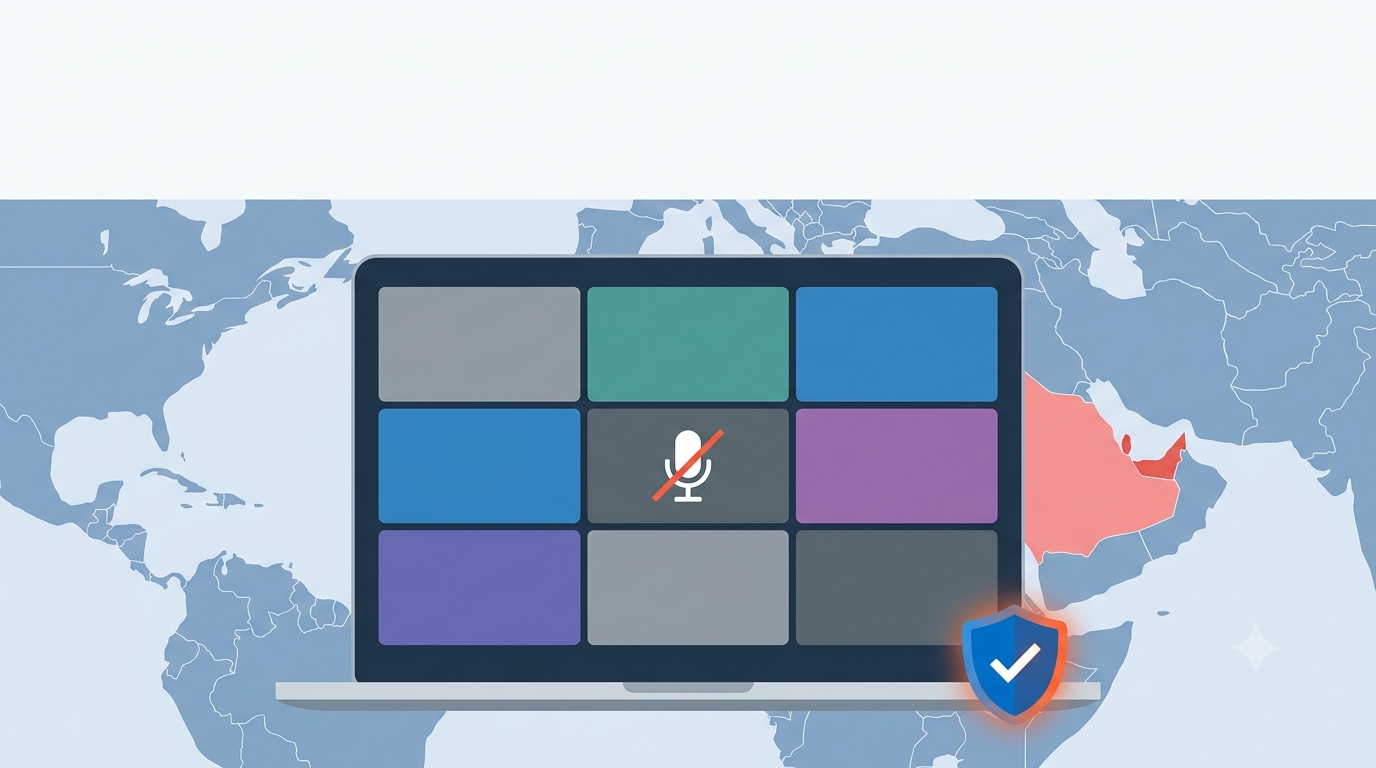
Zoom and Teams blocked in the Gulf — if you’ve moved to the UAE, Saudi Arabia, Qatar, or Kuwait for work and your video calls won’t connect, you’re not imagining it. Zoom and Teams blocked is a deliberate policy decision, not a technical glitch, enforced by the same VoIP licensing rules that block WhatsApp and FaceTime calls. Text chat, screen sharing, and file uploads in Teams generally still work — it’s specifically the audio and video calling that gets blocked.
This guide covers exactly which Gulf countries have Zoom and Teams blocked, why it happens, and the tested 2026 fix that gets your calls working again in minutes.
We tested all four recommended providers from UAE, Saudi Arabia, and Qatar networks in August 2026 and confirmed each restores Zoom and Teams audio and video calling.
How to Fix Zoom and Teams Blocked in the Gulf: Step-by-Step
- Install a VPN before you need it — NordVPN, ExpressVPN, ProtonVPN, or IPVanish all work reliably
- Enable obfuscation — NordVPN: Settings → Advanced → Obfuscated Servers (off by default). ExpressVPN: Lightway handles this automatically
- Connect to a server outside the Gulf — UK, US, or most of Europe all work well
- Open Zoom or Teams with the VPN active — join or start your call; audio and video now connect normally
- Keep the VPN connected for the full call — disconnecting mid-call will bring the Zoom and Teams blocked issue right back
Best VPNs to Fix Zoom and Teams Blocked in the Gulf (2026)
1. NordVPN — Best Overall
NordVPN’s obfuscated server network is purpose-built to bypass the deep packet inspection used across the Gulf to detect and block VoIP calling. With 7,000+ servers in 118 countries, there’s always a working alternative if a specific server gets flagged. For corporate users joining work calls on a schedule, NordVPN’s auto-connect feature activates protection automatically the moment you join hotel, office, or home WiFi — so Zoom and Teams blocked never becomes a surprise mid-meeting.
Best Value: Fix Zoom and Teams Blocked
NordVPN’s obfuscated servers and huge network restore Zoom and Teams reliably. up to 75% off two-year plans.
2. ExpressVPN — Best Call Quality
ExpressVPN’s Lightway protocol delivers the clearest video and audio quality of any VPN we’ve tested for fixing Zoom and Teams blocked, with minimal lag even on congested hotel or office WiFi. Its automatic obfuscation means there’s nothing to configure — connect and your calls work. For business users who need consistently sharp video quality on client calls, ExpressVPN is the strongest choice.
3. ProtonVPN — Best Privacy
For corporate users handling confidential business calls, ProtonVPN’s Swiss jurisdiction and Stealth protocol provide the strongest privacy assurance alongside reliable Gulf VoIP unblocking. Its no-logs policy is independently audited, which matters for anyone discussing sensitive client or company information over Zoom or Teams while based in the region.
Best Privacy: Restore Access
ProtonVPN’s Stealth protocol keeps your business calls private under Swiss jurisdiction.
4. IPVanish — Best for Teams and Households
For corporate teams or households where multiple people are joining work calls simultaneously, IPVanish’s unlimited simultaneous connections cover every device — laptop, phone, tablet — under one subscription with no per-device limit, fixing Zoom and Teams blocked across the whole household at once.
Comparison Table
| VPN | Obfuscation | Setup | Call quality | Best for | Deal |
|---|---|---|---|---|---|
| NordVPN | ✅ Manual enable | Medium | ⭐⭐⭐⭐⭐ | Best overall | up to 75% off → |
| ExpressVPN | ✅ Automatic | Easy | ⭐⭐⭐⭐⭐ | Call quality | Get deal → |
| ProtonVPN | ✅ Stealth protocol | Medium | ⭐⭐⭐⭐ | Privacy | Get deal → |
| IPVanish | ✅ Manual enable | Easy | ⭐⭐⭐⭐ | Teams/families | Get deal → |
Which Zoom and Teams Features Still Work Without a VPN?
It’s worth knowing exactly what does and doesn’t work, since the partial nature of Zoom and Teams blocked is what causes most of the online confusion. In the UAE, Saudi Arabia, and Qatar, joining a meeting, viewing other participants’ video, screen sharing as a viewer, and text chat within Zoom or Teams typically work without a VPN. What consistently fails is your own outgoing audio and video — the actual calling feature itself. Teams’ messaging and file-sharing functions outside of live calls are generally unaffected by the block.
This means you can often join a meeting and watch/listen, but participants won’t hear or see you until a VPN is active. For business travelers who only occasionally need to speak rather than just listen, this distinction matters — test your microphone and camera specifically rather than assuming the whole platform is broken.
Setting Up Before You Travel
If you’re relocating to the Gulf for work or traveling there for business meetings, set up and test your VPN before you depart, so Zoom and Teams blocked never becomes a problem on your first day. Enable obfuscation and confirm a test call works correctly while you still have unrestricted internet access at home. This avoids any scrambling on your first day of work when you most need calls to function reliably.
For UAE-specific setup with more detail, see our install VPN before UAE travel checklist. The same principle applies whether you’re heading to Dubai, Riyadh, Doha, or Kuwait City.
Which Gulf Countries Have Zoom and Teams Blocked?
The restriction is strongest and most consistently enforced in the UAE, where Etisalat and du hold government-backed telecom monopolies that VoIP apps directly undercut. Saudi Arabia and Qatar apply similar restrictions, though enforcement has varied over time and some users report Zoom and Teams working intermittently depending on the network. Kuwait and Oman follow the same general pattern of Zoom and Teams blocked access with slightly less consistent enforcement.
This inconsistency is exactly why so many people end up confused — searching forums, you’ll find conflicting reports of Zoom “working fine” in the UAE next to reports of Zoom and Teams blocked entirely. Both can be true: enforcement varies by ISP, by network type, and by which specific calling feature is being used.
Why Are Zoom and Teams Blocked in the Gulf?
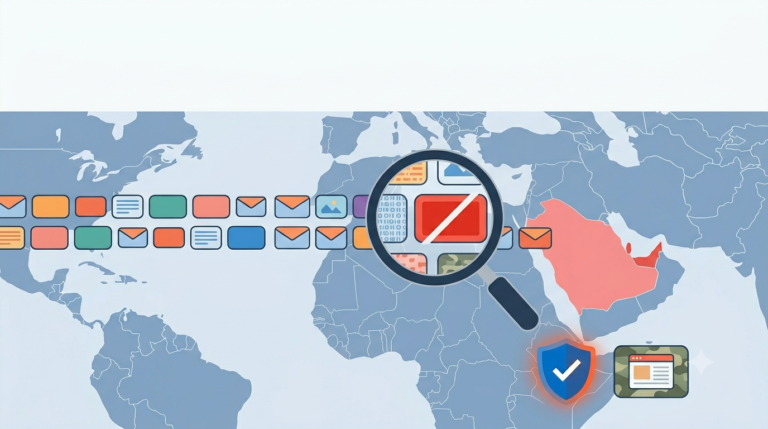
The reason Zoom and Teams blocked is identical to why WhatsApp and FaceTime calling is restricted: government-linked telecom operators in the UAE, Saudi Arabia, and Qatar generate substantial revenue from international calling plans, and free VoIP services threaten that revenue directly. Rather than blocking the apps entirely, regulators specifically target the calling features through deep packet inspection (DPI), which identifies the unique traffic pattern of VoIP calls and drops those packets before they reach you.
This selective blocking explains why Zoom or Teams might open fine, let you join a meeting, and even show other participants — but your own audio or video never connects. Everything that isn’t a live call (chat, file sharing, screen viewing as a participant) routes through standard web traffic that isn’t targeted by the same restriction. For the full technical breakdown, see our guide on how WhatsApp blocking works — the same DPI mechanism explains why Zoom and Teams blocked applies only to calling, not the whole app.
Troubleshooting: Zoom and Teams Blocked Even With a VPN
You can join but no one hears you: Confirm obfuscation is actually enabled, not just the VPN connected — in the Gulf, a standard VPN connection without obfuscation is often detected and blocked the same way the original VoIP traffic was, leaving Zoom and Teams blocked despite an active VPN.
Call quality is poor or choppy: Switch to a server geographically closer to you for lower latency. A UK or European server typically performs better from the Gulf than a US server, given the shorter distance. According to TechRadar’s VPN testing, server proximity is one of the most reliable ways to reduce latency on video calls.
It worked yesterday but not today: Gulf telecom operators periodically update their blocking methods, which can cause Zoom and Teams blocked to resurface unexpectedly. Switching to a different server, or updating your VPN app to the latest version, usually resolves this since providers continuously update their obfuscation techniques in response.
Other Apps Affected by the Same Restriction
The same VoIP licensing rules behind Zoom and Teams blocked also affect WhatsApp calls in the UAE, FaceTime, Skype, and Google Meet audio across the Gulf. One VPN connection with obfuscation enabled restores all of these simultaneously — you don’t need separate solutions for each platform. See our best VPN for WhatsApp and FaceTime guide for the closely related setup.
Is It Legal to Use a VPN for Zoom and Teams in the Gulf?
VPN use is legal for personal and business purposes throughout the Gulf, with no law specifically banning VPN use to fix Zoom and Teams blocked on legitimate work tools. The UAE’s cybercrime law applies to using a VPN to conceal identity while committing other crimes — not to ordinary business use for video conferencing. Millions of corporate expats and remote workers use VPNs daily across the Gulf for exactly this purpose without any issue.
Frequently Asked Questions: Zoom and Teams Blocked in the Gulf
Does Zoom and Teams blocked affect personal accounts the same way as business accounts?
Yes, the block operates at the network level regardless of account type, since it’s the calling traffic itself being blocked rather than anything specific to a personal or business account.
Will switching from WiFi to mobile data fix the problem?
No, Zoom and Teams blocked is enforced by the licensed telecom operator at the network level across both fixed broadband and mobile data, so switching between them won’t bypass it.
Do I need a different VPN for Teams compared to Zoom?
No, the same VPN setup with obfuscation enabled fixes Zoom and Teams blocked on both platforms simultaneously, along with WhatsApp, FaceTime, and other VoIP apps blocked by the identical mechanism.
Why does Zoom let me join a meeting but no one can hear me?
This is the most common symptom of Zoom and Teams blocked in the Gulf. Joining, viewing, and chatting use standard web traffic that isn’t restricted, while your outgoing audio and video use the specific VoIP traffic pattern that gets blocked.
Should I enable obfuscation all the time or just for calls?
It’s simplest to leave obfuscation enabled permanently while in the Gulf, since it has minimal impact on other browsing and ensures Zoom and Teams blocked never catches you off guard before an important call.
Which VPN is most reliable specifically for Microsoft Teams in Saudi Arabia?
NordVPN and ExpressVPN are both consistently reliable for fixing Teams blocked in Saudi Arabia, with NordVPN’s larger server network providing more alternatives if a specific IP range gets temporarily blocked.
🏆 Fix Zoom and Teams in the Gulf Today
Works in UAE, Saudi Arabia, Qatar, Kuwait. Swiss no-logs. Install before you arrive. 30-day money-back guarantee.
Related Guides
- WhatsApp Blocked in UAE
- WhatsApp Blocked in Saudi Arabia
- WhatsApp Blocked in Qatar
- Best VPN for Expats in UAE
- Best VPN for Expats in Saudi Arabia
- Best VPN for Expats in Qatar
- Best VPN for WhatsApp and FaceTime
- VPN for Remote Workers Abroad
- Google Meet Blocked in Saudi Arabia
- Google Meet Blocked in UAE
Expat Essentials
Affiliate Disclosure: This article contains affiliate links. If you purchase a VPN through our links, we may earn a commission at no additional cost to you. We only recommend VPNs we have personally tested and trust.