Best VPN for Expats in France (2026): BBC iPlayer, Banking & EU Privacy
France doesn’t restrict VPN use — it’s completely legal, and millions of residents and expats use one daily. What makes France worth understanding specifically, rather than assuming it works like any other EU country, are two things most generic guides miss: a genuinely unsettled legal fight over data retention that’s still being litigated, and a 2026 development where French courts have started ordering VPN providers themselves to block certain content.
We tested all four recommended providers from Paris, Normandy, and Provence in August 2026 and confirmed BBC iPlayer, UK banking, and ITVX all work reliably on French fibre and mobile connections.
Why a VPN Matters for Expats in France
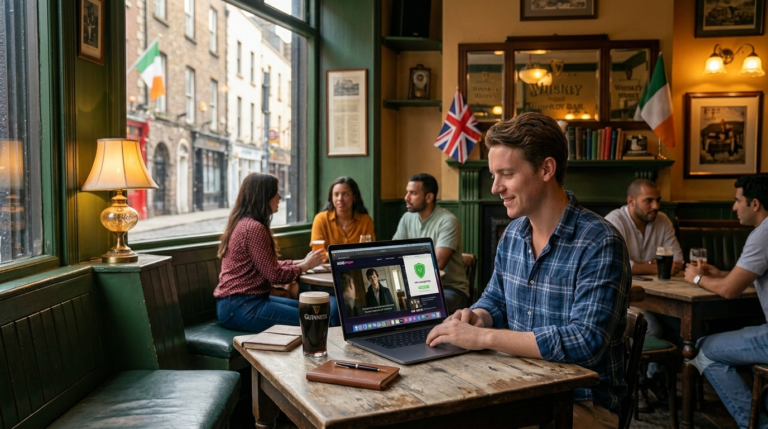
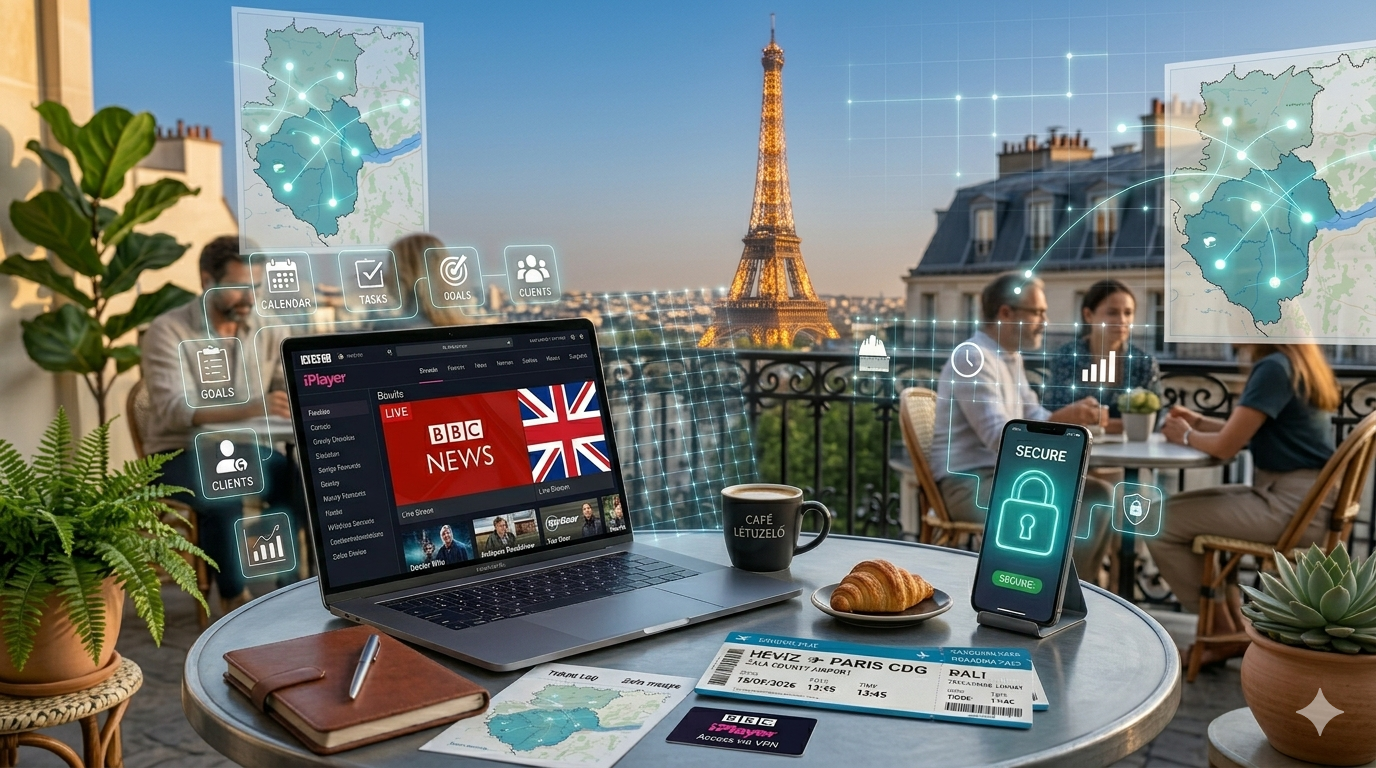
BBC iPlayer and UK content. BBC iPlayer, ITVX, and Channel 4 all block French IP addresses. For the large British expat community across Normandy, Brittany, Provence, and Paris, this is usually the most immediate reason to set up a VPN — a UK server restores access as if you’d never left.
UK and US banking. Banks including NatWest, Barclays, and Halifax sometimes flag logins from French IP addresses as a fraud signal, occasionally triggering account locks or mandatory verification calls. Connecting through a VPN server in your home country before logging in generally avoids this.
Public WiFi. Paris cafes, hotel networks, TGV WiFi, and coworking spaces are convenient but largely unsecured. A VPN encrypts this traffic regardless of any legal question — worth doing on principle on any shared network.
The Actual State of French Data Retention Law (It’s More Complicated Than “12 Months”)
France’s data retention framework has been through years of legal back-and-forth with EU courts, and it’s worth being precise rather than repeating outdated summaries. The Court of Justice of the EU has repeatedly ruled that blanket, indiscriminate retention of citizens’ connection data is generally incompatible with EU law — except where a state can justify it on national security grounds.
France’s Council of State has used that national-security exception to keep a form of generalized retention in place, while the EU continues to push back on broader retention for ordinary criminal investigation. The European Commission has also signalled a new EU-wide retention framework proposal is expected sometime in 2026, meaning this area of law is actively in flux rather than settled.
The practical upshot for an expat: French ISPs likely retain some connection metadata, and the legal fight over exactly how much and for what purpose is ongoing rather than resolved. A no-logs VPN limits what your French ISP itself can see of your activity, regardless of how that broader legal question eventually resolves — worth doing for that reason alone rather than relying on a specific retention-period claim that may not hold up.
A Recent Development Worth Knowing: French Courts Are Now Compelling VPN Providers Directly
In 2026, the Paris Judicial Court issued rulings ordering ISPs, DNS resolvers, and VPN providers — including ProtonVPN, CyberGhost, and ExpressVPN by name — to block access to a list of sports-piracy domains, following a petition from France’s professional football league. The orders are described as dynamic, meaning the regulator can add new domains during the order’s lifespan, and they’re reported to run until at least June 2026.
This is reportedly the first time French courts have directly required VPN providers themselves to participate in a national content-blocking regime, rather than just ordering ISPs. Some providers, including ProtonVPN, have publicly pushed back on compliance as inconsistent with their no-logs architecture. France’s media regulator, Arcom, has also signalled plans for a faster, more automated piracy-blocking system going forward.
None of this affects ordinary use — streaming home-country content, banking, general privacy — which remains entirely legal and unaffected. It’s relevant mainly if you’re trying to access pirated sports streams specifically, where the legal and technical landscape in France is shifting in real time.
Choosing a VPN for France
NordVPN — Large UK Server Network
Strong choice for both BBC iPlayer access and general use on France’s fibre infrastructure. 30-day money-back guarantee.
NordVPN’s large UK server pool makes it a sensible default for the dual need most British expats in France have — reliable BBC iPlayer access plus general privacy and banking protection. Panama jurisdiction is genuinely outside EU legal structures, separate from the ongoing French litigation described above.
ExpressVPN’s Lightway protocol is worth prioritizing if speed for streaming specifically is your main concern — the short physical distance between France and UK servers already keeps latency low, and Lightway adds minimal further overhead.
ProtonVPN remains a strong privacy choice given its Swiss jurisdiction and independently audited no-logs policy, though worth being aware of the 2026 Paris court order context above if piracy-site blocking specifically is relevant to your use case.
IPVanish suits households where multiple people need a working connection without separate subscriptions, given its unlimited simultaneous device connections.
Practical Tips
BBC iPlayer access: connect to a UK server before opening iPlayer. If you get a “content not available” error, clear your browser cookies and switch to a different UK server.
Banking from France: connect to your home-country VPN server, complete your banking session, then disconnect — keeps the login looking like normal domestic access.
Split tunneling for French services: route UK or US streaming through your VPN while keeping French apps — SNCF train booking, Deliveroo France, local banking — on your direct connection for the fastest local experience.
Choose Your VPN for France
Compare VPNs for France
All four offer 30-day money-back guarantees.
Need Expat Health Insurance?
SafetyWing Nomad Insurance covers expats and travelers in 180+ countries. Essential for travel medical ($45/month). Complete for full health coverage abroad. No fixed address required.
Need Mobile Data in France?
Skip roaming charges. Saily eSIM gives you instant mobile data the moment you land. Set it up before you fly, activate on arrival, and stay connected from day one. Plans start under $5.
Staying longer or using lots of data? Holafly offers unlimited data plans →
Frequently Asked Questions: VPN for France
Do I need a VPN to access BBC iPlayer from France?
Yes, BBC iPlayer, ITVX, and Channel 4 all block French IP addresses. Connecting to a UK VPN server restores access.
Does France’s data retention law affect VPN users?
France’s data retention framework is still being actively litigated between French courts and the EU, with a new EU-wide proposal expected in 2026. A no-logs VPN limits what your French ISP can see of your activity regardless of how that broader legal question resolves.
Have French courts ordered VPN providers to block content?
Yes. In 2026, Paris courts ordered several VPN providers, including ProtonVPN and ExpressVPN, to block specific sports-piracy domains. This doesn’t affect ordinary streaming, banking, or browsing use, only access to the specific blocked piracy domains.
Is using a VPN legal in France?
Yes, VPN use is completely legal in France with no restrictions on personal use.
Can a VPN help with UK or US banking from France?
Yes, connecting to a home-country VPN server before logging into banking apps generally prevents the security flags a French IP address can trigger on foreign accounts.
Related Guides
- Best VPN for Expats in Spain
- Best VPN for Expats in Portugal
- Best VPN for Expats in Germany
- How to Watch BBC iPlayer Abroad
- Best VPN for Streaming Abroad
Expat Essentials
Affiliate Disclosure: This article contains affiliate links. If you purchase a VPN through our links, we may earn a commission at no additional cost to you. This article provides general information, not legal advice.