Is VPN Legal in Thailand? (2026): What Expats and Tourists Need to Know
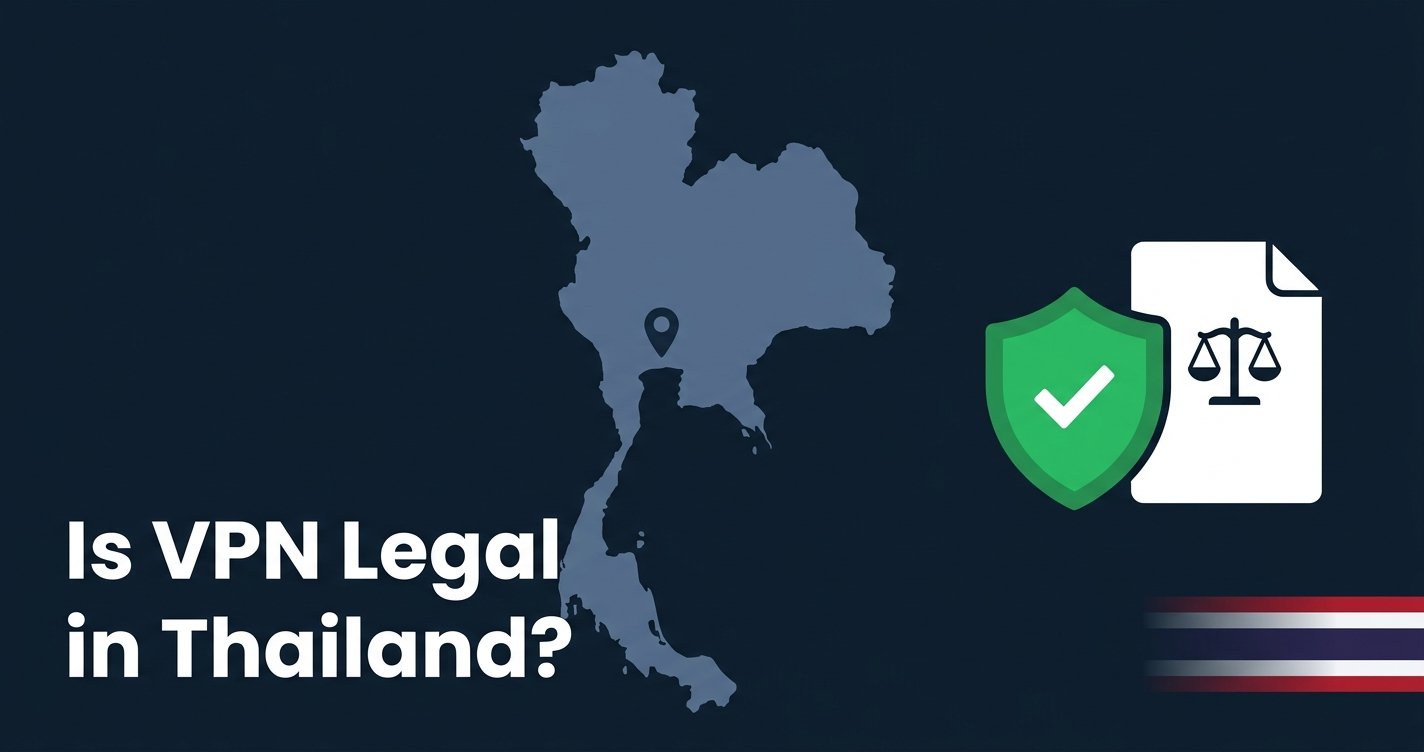
Is VPN legal in Thailand? Yes. There is no Thai law that bans a private person from installing or using a VPN, and millions of Thais, expats, and tourists use one every day for banking, streaming, and security on public WiFi.
What matters is not the VPN but what you do with it. Thailand has strict laws on online speech, obscene content, and gambling, and a VPN does not make an illegal activity legal. This guide explains exactly where the lines are, what is actually blocked in Thailand, and how expats use a VPN without any legal risk.
We cover the Computer Crime Act, data retention rules, whether apps like Discord and Telegram are banned, and practical setup tips for Bangkok, Pattaya, Phuket, Hua Hin, and Chiang Mai. This is general information, not legal advice.
Is VPN Legal in Thailand? The Short Answer
Using a VPN is legal in Thailand for personal and business use. No licence is needed, VPN provider websites are not blocked, and the major VPN apps are available in the Thai App Store and Google Play.
So when people ask “is VPN legal in Thailand”, the honest answer has two parts. The tool is legal, but the law still applies to the content you post, share, or access through it.
That makes Thailand very different from countries like China, Iran, or the UAE, where VPN use itself is restricted or regulated. For a comparison with European rules, see our guides on whether a VPN is legal in Spain and whether a VPN is legal in Germany.
🏆 Best VPN for Expats in Thailand
Using a VPN is legal in Thailand. NordVPN protects you on hotel and condo WiFi and keeps your UK bank, BBC iPlayer and home services working. 30-day money-back guarantee.
What Thai Law Actually Says
The main law is the Computer-Related Crime Act of 2007, significantly amended in 2017. According to Siam Legal’s overview of the Thailand Computer Crime Act, the 2017 amendment broadened offences and introduced tougher penalties.
Section 14 covers putting false, distorted, or obscene information into a computer system, and content that threatens national security. This is the section behind most online speech prosecutions, and it targets posting and sharing, not the software you connect with.
Section 20 allows authorities, with a court order, to block websites and content considered illegal or a threat to public order. This is how Thailand builds its block list, which every licensed ISP must enforce.
Section 26 requires service providers to retain user traffic data for at least 90 days, and longer on official request. This applies to ISPs and many public WiFi operators, which is one of the main privacy reasons expats use a VPN.
Separately, Section 112 of the Criminal Code, the lèse-majesté law, protects the monarchy and carries heavy prison sentences. It applies to online posts, including those made through a VPN.
What Stays Illegal With or Without a VPN
Because the answer to “is VPN legal in Thailand” is yes, the real risk sits with the underlying activity. A VPN hides the destination of your traffic from your ISP, but it does not change what Thai law allows.
- Content about the monarchy. Criticising or mocking the royal family online can lead to prosecution under Section 112, including for foreigners.
- False information and defamation. Posts that authorities consider false or damaging can fall under Section 14, and criminal defamation is common in Thailand.
- Obscene material. Producing or distributing pornography is illegal, and many adult sites are blocked.
- Online gambling. Gambling is illegal in Thailand under the Gambling Act, and using a VPN does not change that.
- Pirated content. Illegal streaming and torrenting of copyrighted content breaks Thai copyright law.
For everyday expat use, such as home-country streaming, banking, and privacy on public networks, none of these lines come into play.
What Is Actually Blocked in Thailand?
Thailand filters content rather than whole platforms. The Ministry of Digital Economy and Society maintains a block list that ISPs such as AIS, True, and 3BB apply nationwide.
The list mainly covers adult websites, illegal gambling sites, piracy sites, and specific pages with political or royal content. Major platforms like Google, YouTube, Facebook, Instagram, and X work normally.
According to Freedom House’s Freedom on the Net report for Thailand, the country is rated “Not Free”, mainly because of prosecutions for online speech rather than technical blocking of everyday services.
Is Discord, Telegram, WhatsApp, or TikTok Banned in Thailand?
No. Discord, Telegram, WhatsApp, TikTok, Signal, and Zoom all work in Thailand without a VPN, and voice and video calls are not restricted. LINE is the most popular messaging app locally, but foreign apps are not blocked.
If one of these apps fails to load in Thailand, the cause is usually a local network, hotel WiFi, or app problem rather than a government block. Our guides on countries where Discord is banned, Telegram blocked countries, and TikTok banned countries list where real bans exist.
🔒 Proton VPN: Maximum Privacy in Thailand
Swiss no-logs protection on public WiFi, with servers in the UK, Europe and Asia and a flexible monthly plan. 30-day money-back guarantee.
Why Expats in Thailand Use a VPN Legally
Once you know the answer to “is VPN legal in Thailand”, the next question is what a VPN is actually useful for. For most expats it comes down to four everyday jobs.
Home-country streaming. BBC iPlayer, ARD Mediathek, SVT Play, NRK TV, and france.tv block Thai IP addresses. A home-country server restores them, as explained in our guides to BBC iPlayer abroad and German TV abroad.
Home banking. Many UK, EU, and Nordic banks flag logins from Thai IPs as suspicious. Our guide to which banks block VPN connections explains how to avoid lockouts.
Public WiFi security. Condo, cafe, airport, and coworking WiFi in Thailand is often unencrypted. A VPN protects your logins, as covered in our public WiFi safety tips.
Privacy from data retention. Because Section 26 requires providers to keep traffic data, a VPN with a verified no-logs policy limits what local operators can see about your browsing.
Is VPN Legal in Thailand for Tourists and Short Stays?
Yes. The rules are the same for tourists, digital nomads, retirees, and long-term residents. There is no registration, no declaration at the airport, and no requirement to uninstall VPN apps before entering the country.
Having a VPN app on your phone is not an offence. If you are ever asked about it, it is simply a privacy and security tool, the same as it is for Thai office workers and students.
Short-stay visitors should install and test their VPN before flying. It is not blocked in Thailand, but setting it up at home means you are protected from your first connection at Suvarnabhumi or Phuket airport.
Is VPN Legal in Thailand for Remote Work and Business?
Yes. Companies in Bangkok use corporate VPNs every day to connect staff to internal systems, and foreign employers do the same for remote workers based in Thailand. Connecting to your employer’s network from a Thai condo or coworking space is completely normal.
The question of whether you are allowed to work remotely in Thailand is a visa matter, not a VPN matter. Digital nomads should check that their visa, such as the Destination Thailand Visa, covers remote work for foreign clients or employers.
For the technical side of working securely, see our guides to VPNs for remote workers abroad and VPNs for coworking spaces.
Common Myths About VPNs in Thailand
Myth: Thailand bans VPNs like China does. False. Is VPN legal in Thailand? Yes, and VPN protocols and provider websites are not blocked. The confusion usually comes from Thailand’s strict speech laws, which are about content, not tools.
Myth: A VPN makes anything legal. Also false. A VPN hides the destination of your traffic from your ISP, but illegal posts, gambling, and piracy remain illegal whatever connection you use.
Myth: Police check tourists’ phones for VPN apps. There is no law that makes a VPN app an offence, so a VPN on your phone is not a reason for trouble. Keep your online activity within Thai law and a VPN is simply a security tool.
Myth: Free VPNs are good enough in Thailand. Because VPN use is legal in Thailand, the real risk with free VPNs is privacy rather than the law. Many log or sell your data, which is the opposite of what you want under local data retention rules.
How to Use a VPN Legally in Thailand
- Choose a paid VPN with an audited no-logs policy. Free VPNs often log and sell data, which defeats the purpose. See our honest guide to free VPNs.
- Install it before you travel. This saves time and protects your first airport or hotel connection.
- Use a nearby server for daily browsing. Singapore or Hong Kong gives the lowest latency for Thai apps and general use.
- Switch to a home-country server for streaming and banking. UK, German, Swedish, or other home servers restore geo-blocked services.
- Keep your online behaviour within Thai law. A VPN protects your privacy, not illegal posts, gambling, or pirated content.
Which VPN Works Best in Thailand?
Thailand does not block VPN protocols, so there is no need for obfuscation. The best choice depends on what you need from home.
NordVPN is the best all-round option, with fast Asian servers and large UK, German, Nordic, and EU server pools for streaming and banking. ProtonVPN is the strongest choice for privacy, thanks to Swiss jurisdiction and independently audited apps.
ExpressVPN is a good pick if streaming speed matters most. For a full comparison, see our guide to the best VPN for expats in Thailand, and our retiring to Thailand VPN guide if you are settling long term.
Official travel guidance is worth reading alongside any VPN setup. The UK Government’s living in Thailand guidance covers local laws that affect residents, including rules on online behaviour.
🎯 Choose Your VPN for Thailand
All VPNs offer 30-day money-back guarantees
Frequently Asked Questions: Is VPN Legal in Thailand?
Is VPN legal in Thailand?
Yes. No Thai law bans personal or business VPN use. The legal risk comes from what you do online, such as illegal posts, gambling, or pirated content, not from the VPN itself.
Is VPN legal in Thailand for tourists?
Yes. Tourists, digital nomads, and residents follow the same rules. There is no registration or declaration, and having a VPN app on your phone is not an offence.
Can Thai authorities see what I do with a VPN?
Your ISP can see that you are connected to a VPN, but not which websites you visit. Section 26 of the Computer Crime Act requires providers to keep traffic data, which is why a VPN with an audited no-logs policy matters.
Is Discord or Telegram banned in Thailand?
No. Discord, Telegram, WhatsApp, TikTok, and Signal all work in Thailand without a VPN, including voice and video calls.
Does a VPN make online gambling legal in Thailand?
No. Gambling is illegal in Thailand under the Gambling Act, and using a VPN does not change the legal status of the activity.
Related Guides
- Best VPN for Expats in Thailand
- Retiring to Thailand VPN Guide
- Best VPN for Digital Nomads in Bangkok
- Is VPN Legal in Spain?
- Is VPN Legal in Germany?
- Deep Packet Inspection Explained
Expat Essentials
Affiliate Disclosure: This article contains affiliate links. If you purchase a VPN through our links, we may earn a commission at no additional cost to you. This article provides general information, not legal advice.