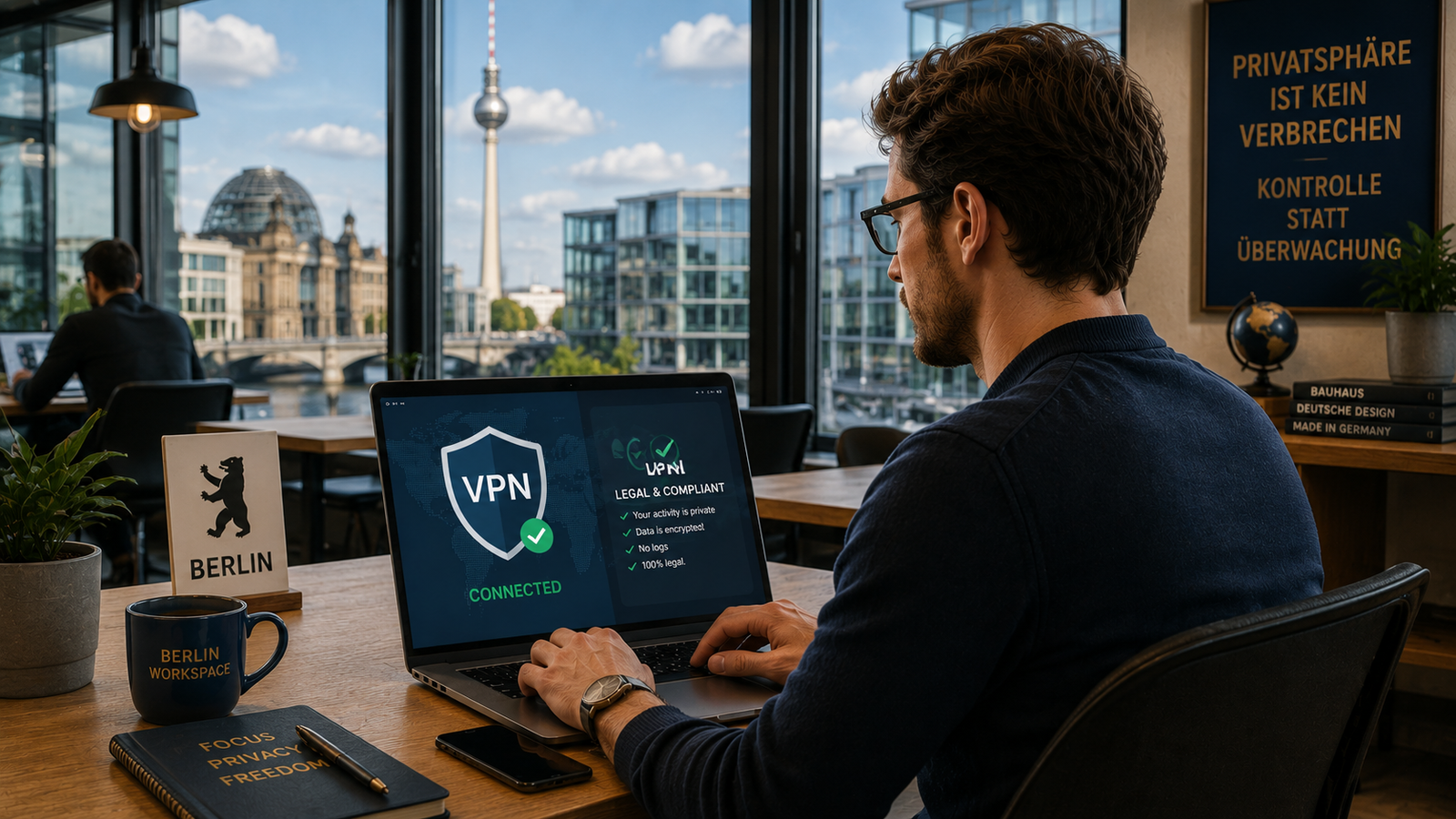
Is VPN Legal in Germany? (2026): Everything Expats and Residents Need to Know
Is VPN legal in Germany? Yes — using a VPN in Germany is completely legal.
Germany is one of Europe’s most privacy-conscious countries, with strong constitutional protections for personal data and a legal framework that explicitly supports individuals’ rights to use privacy tools. Whether you’re an expat, a tourist, or a German resident, you can use a VPN freely in Germany for privacy, security, and to access geo-restricted content. This guide covers VPN legality in Germany, what you can and can’t do, and which VPNs work best from German IP addresses.
Is VPN Legal in Germany? The Direct Answer
Yes — is VPN legal in Germany is answered simply: VPN use is completely legal. Germany has no legislation restricting VPN use for personal or professional purposes. The German government does not require VPN registration, does not block VPN services, and does not penalise individuals for using them. Germany is governed by both its own Bundesdatenschutzgesetz (Federal Data Protection Act) and EU GDPR, both of which enshrine strong privacy rights that VPN use is entirely consistent with.
🏆 Best VPN to Use Legally in Germany
NordVPN is our top pick: fast NordLynx speeds, obfuscated servers for restricted networks and a 30-day money-back guarantee.
Germany is in fact notable in Europe for its strong privacy culture. The German Federal Constitutional Court has repeatedly upheld informational self-determination — the right of individuals to control their own personal data — as a fundamental right. Using a VPN to protect your data and privacy online is supported by this legal and cultural tradition. The German data protection authority (Bundesbeauftragte für den Datenschutz und die Informationsfreiheit, or BfDI) actively promotes individual privacy online.
Best VPN for Germany — Our Top Pick
VPN use is 100% legal in Germany. NordVPN is the best choice for expats and residents — stream your home content and stay private.
Germany’s Unique Copyright Enforcement Context
While VPN use itself is legal, Germany has a particularly aggressive copyright enforcement environment that every resident and expat should understand. Germany is well known for the practice of Abmahnung — formal copyright warning letters sent by law firms on behalf of rightsholders to individuals caught downloading or sharing copyrighted material via torrents. German ISPs are legally required to provide user data to courts investigating copyright infringement.
This is relevant to the is VPN legal in Germany question because it highlights why many German internet users use VPNs: to protect against Abmahnung exposure. Using a VPN to download pirated content is still illegal — the VPN doesn’t make the underlying act legal.
However, using a VPN to protect your privacy while legally browsing, streaming, and working online is completely legitimate and widely practised in Germany. The Abmahnung system is precisely why Germany has one of the highest VPN adoption rates in Europe.
What Can You Legally Do With a VPN in Germany?
All of the following are legal uses of a VPN in Germany. Protecting your privacy and preventing your ISP from logging your browsing activity — legal. Accessing home-country streaming services like BBC iPlayer, Hulu, or Netflix US from a German IP address — legal. Securing your connection on public WiFi in German cafés, airports, and hotel networks — legal.
Using a VPN for secure remote access to company networks — legal and standard business practice. Hiding your IP address from advertisers and data brokers — legal. Using a VPN to avoid geo-pricing — legal in Germany. The answer to is VPN legal in Germany is clearly yes for all legitimate uses.
The only caveat: a VPN does not provide legal cover for illegal acts. Piracy, accessing CSAM, fraud, or any other criminal activity remains illegal regardless of VPN use. German law enforcement has successfully prosecuted cases involving VPN use where the underlying criminal activity was severe enough to compel provider cooperation. This is not a concern for legitimate users, but it’s worth stating clearly.
Germany and EU Data Retention
Germany has had a complex relationship with EU data retention directives. The German Federal Constitutional Court and the European Court of Justice have both struck down broad data retention laws as incompatible with fundamental rights on multiple occasions. As of 2026, Germany’s data retention framework is in a state of ongoing legal revision following repeated court rulings against mass surveillance of internet traffic.
In practice, this means German ISPs currently have limited obligations to retain connection metadata, though law enforcement can still request data in specific investigations. Using a VPN means your ISP sees only that you’re connected to a VPN server — not what sites you visit or what content you access. This is entirely consistent with is VPN legal in Germany — and with Germany’s strong privacy rights tradition.
Why Expats in Germany Use VPNs
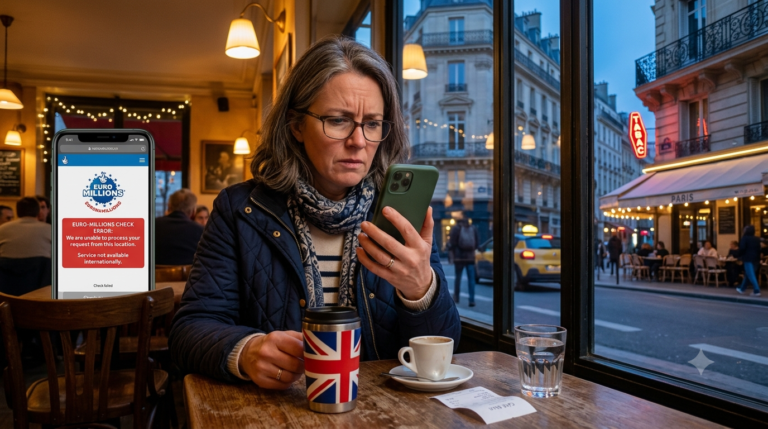
For expats in Germany, the main practical reason to use a VPN is geo-restricted streaming. Germany has excellent native streaming options — ARD Mediathek, ZDF Mediathek, RTL+, and Joyn — but expats want their home-country content. British expats in Berlin, Munich, Frankfurt, and Hamburg want BBC iPlayer and ITVX.
Irish expats want RTÉ Player — see our guide on how to watch RTÉ abroad. American expats want Hulu and ESPN+. Given that is VPN legal in Germany is clearly yes, expats can access all of this without any legal concern. The same applies if you’re based in the Netherlands or Spain.
German copyright enforcement culture also makes VPN use practically sensible even for entirely legal streaming. A VPN protects you from any accidental exposure and ensures your connection is encrypted on public and hotel networks. Many expats in Germany also use VPNs for online banking, keeping their home-country bank accounts accessible without triggering fraud alerts from unusual German IP addresses.
Best VPNs to Use in Germany (2026)
Now that is VPN legal in Germany is confirmed, here are the best options for expats and residents in 2026. Germany has excellent broadband and 5G infrastructure, so any major VPN will perform well on speeds — the key factors are privacy jurisdiction, streaming performance, and no-logs policy.
NordVPN — Best Overall for Germany
NordVPN is based in Panama, well outside EU data retention obligations, with an independently audited no-logs policy. It has 7,000+ servers in 118 countries and reliably unblocks BBC iPlayer, Hulu, Netflix US, and other major streaming platforms from German IP addresses. Up to 75% off on two-year plans with a 30-day guarantee. NordVPN’s Threat Protection feature is particularly useful in Germany for blocking trackers and Abmahnung-adjacent ad networks.
ExpressVPN — Best for Streaming from Germany
ExpressVPN is the most consistent streaming VPN and works reliably from Germany to access BBC iPlayer, Hulu, and other geo-restricted platforms. Based in the British Virgin Islands, outside EU data retention laws. Its Lightway protocol delivers excellent speeds on German broadband. For British expats in Germany who primarily want BBC iPlayer access, ExpressVPN is the most dependable choice.
ProtonVPN — Best for Privacy in Germany
For a country with such a strong privacy tradition, ProtonVPN — headquartered in Switzerland, with fully audited open-source apps — is a natural fit. Swiss law provides some of the strongest privacy protections in the world, and ProtonVPN is not subject to EU data retention at all. Its Secure Core and Stealth features add extra layers of protection. The is VPN legal in Germany question aligns perfectly with ProtonVPN’s privacy mission — use it legally with complete confidence.
Best Privacy VPN for Germany
ProtonVPN’s Swiss base aligns perfectly with Germany’s strong privacy culture — completely outside EU data retention.
IPVanish — Best for Germany Expat Families
IPVanish’s unlimited simultaneous device connections make it the best value option for expat families in Germany with multiple devices needing protection. All devices in the household covered under one subscription, at a competitive annual price. Completely legal to use in Germany — the answer to is VPN legal in Germany applies equally to IPVanish.
Summary: Is VPN Legal in Germany?
Is VPN legal in Germany — yes, completely and without restriction for personal and professional use. Germany’s strong privacy tradition, constitutional data protection rights, and GDPR framework all support the use of privacy tools including VPNs. The only illegal uses are those where the underlying activity is itself illegal — piracy, criminal fraud, and so on — and a VPN doesn’t provide cover for those in any country.
For expats and residents in Germany, a VPN is a practical tool for accessing home streaming, securing public WiFi connections, and protecting your data from ISP logging and advertiser tracking.
Choose a reputable provider based outside the EU with a strong no-logs policy, and use it with complete confidence. The German Federal Data Protection Commissioner (BfDI) provides further guidance on digital privacy rights for residents, and the German Federal Office for Information Security (BSI) recommends using VPNs as a cybersecurity best practice for remote workers and travellers.
Compare All Four VPNs for Germany
🏆 Ready to Set Up Your Germany VPN?
NordVPN is our top pick: fast NordLynx speeds, obfuscated servers for restricted networks and a 30-day money-back guarantee.
NordVPN delivers fast servers for ARD Mediathek, banking, and WiFi protection across Germany. 30-day money-back guarantee.
Related Guides
The is VPN legal in Germany question aligns with Germany’s strong privacy tradition — use your VPN freely for streaming, banking, and privacy.
For expat life in Germany, read our full guide to the best VPN for expats in Germany. You may also be interested in how to watch ARD Mediathek abroad, our VPN for online banking while traveling guide, or whether VPN is legal in Spain. Also considering the Netherlands? See the best VPN for expats in the Netherlands. See our full best VPN for expats 2026 comparison for a broader overview.
Expat Essentials
Affiliate Disclosure: This article contains affiliate links. If you purchase a VPN through our links, we may earn a commission at no additional cost to you. We only recommend VPNs we have personally tested and trust.