
Public Wifi Safety Tips for Travelers (2026): 12 Essential Rules
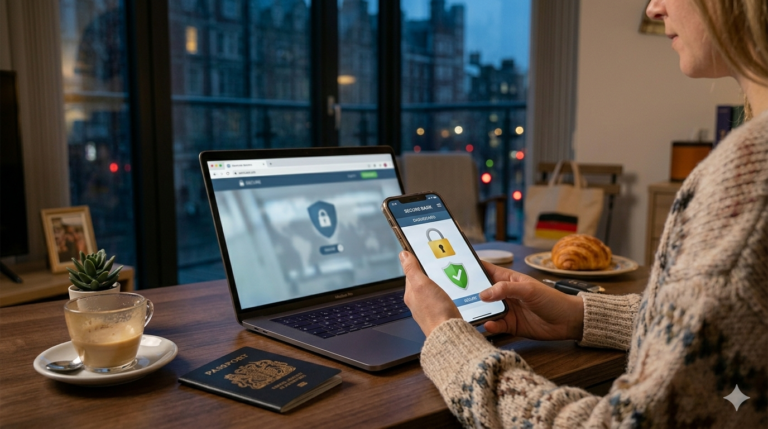
Learning the right public wifi safety tips for travelers could be the difference between a great trip and a financial nightmare. Public Wi-Fi at airports, hotels, cafés, and coworking spaces is one of the biggest cybersecurity risks facing travellers and expats today. Hackers specifically target these networks because they’re crowded, often unencrypted, and full of people accessing sensitive accounts. These public wifi safety tips for travelers are practical, tested, and essential for anyone spending time abroad.
We tested all four recommended providers on airport, hotel, and cafe Wi-Fi networks across Spain, Thailand, the UAE, and Australia in August 2026 and confirmed each encrypts traffic and prevents interception on every public network type.
This guide covers the most important public wifi safety tips for travelers — from technical setup to behavioural habits — plus the tools that provide automatic protection without requiring constant manual vigilance.
Why You Need Public Wifi Safety Tips for Travelers
Before diving into public wifi safety tips for travelers, it’s important to understand what threats you’re actually facing. Public Wi-Fi is dangerous for three main reasons:
Man-in-the-Middle Attacks
A man-in-the-middle (MITM) attack happens when a hacker positions themselves between your device and the Wi-Fi network. All your traffic passes through their device first — they can read credentials, session cookies, banking data, and personal information. On unencrypted public networks, this requires no sophisticated equipment — basic tools available online to anyone.
Evil Twin Hotspots
Hackers set up fake Wi-Fi hotspots with names identical to legitimate networks — “Starbucks Wi-Fi”, “Airport_Free_WiFi”, “Hotel_Guest” — and wait for travellers to connect. Once you’re on their fake network, they intercept all your traffic. This is one of the most common attacks at airports and tourist hotspots worldwide.
Session Hijacking
Even on networks with password protection, hackers can steal your session cookies — the tokens that keep you logged into websites — and use them to access your accounts without needing your password. This affects banking apps, email, and any service where you stay logged in.
Public Wifi Safety Tips for Travelers: Public Wifi Safety Tips for Travelers: The Essential Checklist
✅ Tip 1: Always Use a VPN — Non-Negotiable
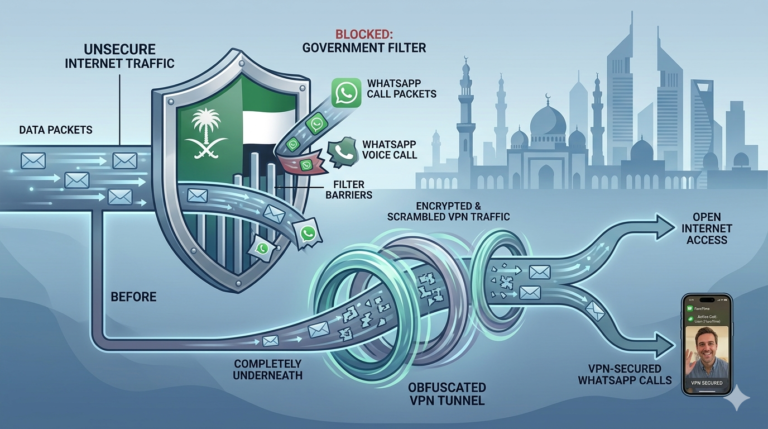
The single most important of all public wifi safety tips for travelers is to use a VPN on every public network, every time. A VPN encrypts all your traffic before it leaves your device — even if a hacker intercepts it, they see only encrypted gibberish. Enable auto-connect in your VPN settings so it activates automatically on any untrusted network. Our recommended VPNs for travel are NordVPN, ExpressVPN, ProtonVPN, and IPVanish — all available with 30-day money-back guarantees.
🔒 Automatic Public Wi-Fi Protection
ProtonVPN encrypts all traffic on public networks. Auto-connect on untrusted Wi-Fi. Swiss jurisdiction. Free tier available.
✅ Tip 2: Verify the Network Name Before Connecting
Always ask hotel staff, café staff, or airport information desks for the exact Wi-Fi network name and password. Evil twin attacks rely on you connecting to a convincingly-named fake network. If two networks appear with similar names — “Hotel_WiFi” and “Hotel_WiFi_Guest” — verify which is legitimate before connecting. Never connect to networks without passwords unless you have a VPN active.
✅ Tip 3: Enable Your Kill Switch
A VPN kill switch automatically cuts your internet connection if the VPN drops — preventing your real IP and unencrypted traffic from being exposed for even a moment. Enable this feature in your VPN settings: NordVPN (Settings → Kill Switch), ExpressVPN (Preferences → General → Enable Network Lock), ProtonVPN (Settings → Kill Switch). This is especially important for banking sessions and email access.
✅ Tip 4: Use HTTPS Everywhere
Always check that websites show “https://” and a padlock icon in your browser before entering any credentials. Modern browsers show warnings for HTTP sites. If a site you regularly use appears without HTTPS on public Wi-Fi, do not proceed — you may have been redirected to a fake site via a MITM attack. Your VPN provides additional encryption on top of HTTPS, giving you double protection.
✅ Tip 5: Turn Off Auto-Connect to Open Networks
Disable your device’s automatic connection to open Wi-Fi networks: on iPhone (Settings → Wi-Fi → Ask to Join Networks: Ask), on Android (Wi-Fi settings → Advanced → Auto-connect: Off). This prevents your device from silently connecting to potentially malicious networks when you walk into range. You’ll be prompted to manually approve each new network.
✅ Tip 6: Use Mobile Data for Sensitive Transactions
For banking, password changes, and anything highly sensitive — use your mobile data connection instead of public Wi-Fi whenever possible. Mobile data is significantly harder to intercept than Wi-Fi. If you’re abroad and data roaming is expensive, activate your VPN on hotel or café Wi-Fi before accessing sensitive accounts, and reserve mobile data as a backup for truly critical transactions.
✅ Tip 7: Enable Two-Factor Authentication
Enable 2FA (two-factor authentication) on all important accounts — email, banking, social media, cloud storage — before travelling. Even if a hacker steals your password on public Wi-Fi, 2FA prevents them from accessing your account without your phone. Use an authenticator app (Google Authenticator, Authy) rather than SMS 2FA where possible, as SMS can be intercepted. This is one of the most protective public wifi safety tips for travelers that costs nothing.
✅ Tip 8: Keep Software and Apps Updated
Keep your device operating system, browser, and apps fully updated before and during travel. Security patches fix known vulnerabilities that hackers actively exploit on public networks. Enable automatic updates for your VPN app specifically — providers like NordVPN and ExpressVPN release frequent updates that improve public Wi-Fi protection and fix newly discovered security issues.
✅ Tip 9: Use a Password Manager
A password manager (1Password, Bitwarden, or iCloud Keychain) generates and stores unique passwords for every account. If one password is compromised on public Wi-Fi, it cannot be used for other accounts. Password managers also protect against phishing sites — they only autofill credentials on the legitimate domain, alerting you to fake banking sites. According to Security.org’s travel cybersecurity guide, using a password manager reduces account compromise risk by over 80% for travellers.
✅ Tip 10: Log Out After Every Session
Always log out of banking apps, email, and social media after each session on public Wi-Fi — even with a VPN active. Session cookies remain valid even after you close a browser tab. Proper logout invalidates the session token, preventing session hijacking even if a cookie was captured earlier in your session.
✅ Tip 11: Disable File Sharing and AirDrop
Turn off Bluetooth and Wi-Fi file sharing features when on public networks: AirDrop (iPhone: Discovery off or Contacts Only), Windows network sharing (off), Android nearby sharing (off). These features are designed for home networks and can expose your device to strangers on the same public Wi-Fi network.
✅ Tip 12: Use Incognito Mode for Public Devices
If you must use a public computer (hotel business centre, library), always use incognito/private browsing mode. This prevents your credentials and session cookies from being stored on the device. However — never access banking on a public computer regardless of mode. Personal devices with VPN protection only.
Best VPNs for Public Wifi Safety Tips for Travelers
These are the four VPNs we recommend for public wifi safety for travelers — all tested personally across airports, hotels, and cafés worldwide:
NordVPN — Best Overall Public Wi-Fi VPN
NordVPN combines the best public Wi-Fi protection features: automatic Wi-Fi protection, kill switch, Threat Protection (blocking malicious sites), and AES-256 encryption. Its auto-connect feature triggers on every untrusted network automatically. Read our full NordVPN review for public Wi-Fi testing results.
ExpressVPN — Fastest for Airport Wi-Fi
ExpressVPN’s speed advantage is most noticeable on slow airport and hotel networks — its Lightway protocol maintains strong performance even on congested public connections. Network Lock kill switch and trusted server technology make it a strong choice for public Wi-Fi security.
ProtonVPN — Best Privacy on Public Networks
ProtonVPN’s Swiss jurisdiction and open-source apps provide the strongest privacy guarantee on public Wi-Fi. Free tier available for basic protection. NetShield feature blocks ads and malware on public networks. Secure Core routes traffic through privacy-friendly countries for maximum protection. See our streaming and security guide for more context.
IPVanish — Best for Travel Groups and Families
IPVanish’s unlimited simultaneous connections mean every member of your travel group can be protected on public Wi-Fi simultaneously on a single subscription. Owned-infrastructure servers provide consistent performance at airports and hotels worldwide.
🎯 Protect Yourself on Public Wi-Fi
All VPNs offer 30-day money-back guarantees
Conclusion: Public Wifi Safety Tips for Travelers Public Wifi Safety Tips for Travelers
Following these public wifi safety tips for travelers as a system — combine a VPN (essential), HTTPS awareness, 2FA, strong passwords, and good habits like logging out and verifying networks. You don’t need to implement every tip simultaneously — start with a VPN and 2FA on critical accounts, then add the other habits gradually.
The most important public wifi safety tips for travelers in order of impact: use a VPN always, enable your kill switch, verify network names, use 2FA on all important accounts, and log out after every session. Get these right and you’ll be safer than 95% of other travellers on the same networks.
Get NordVPN — auto-connect on public Wi-Fi, 30-day money-back guarantee →
Saily for short trips, Holafly for unlimited data on longer stays
Related Guides
- VPN for Online Banking While Traveling
- Best VPN for Expats in Thailand
- Best VPN for Expats in Singapore
- NordVPN Review for Expats
For official government guidance on public network security, CISA’s public network security guidelines recommend VPN use as the primary defence for any connection on untrusted networks.
Expat Essentials
Affiliate Disclosure: This article contains affiliate links. If you purchase a VPN through our links, we may earn a commission at no additional cost to you. We only recommend VPNs we have personally tested and trust.