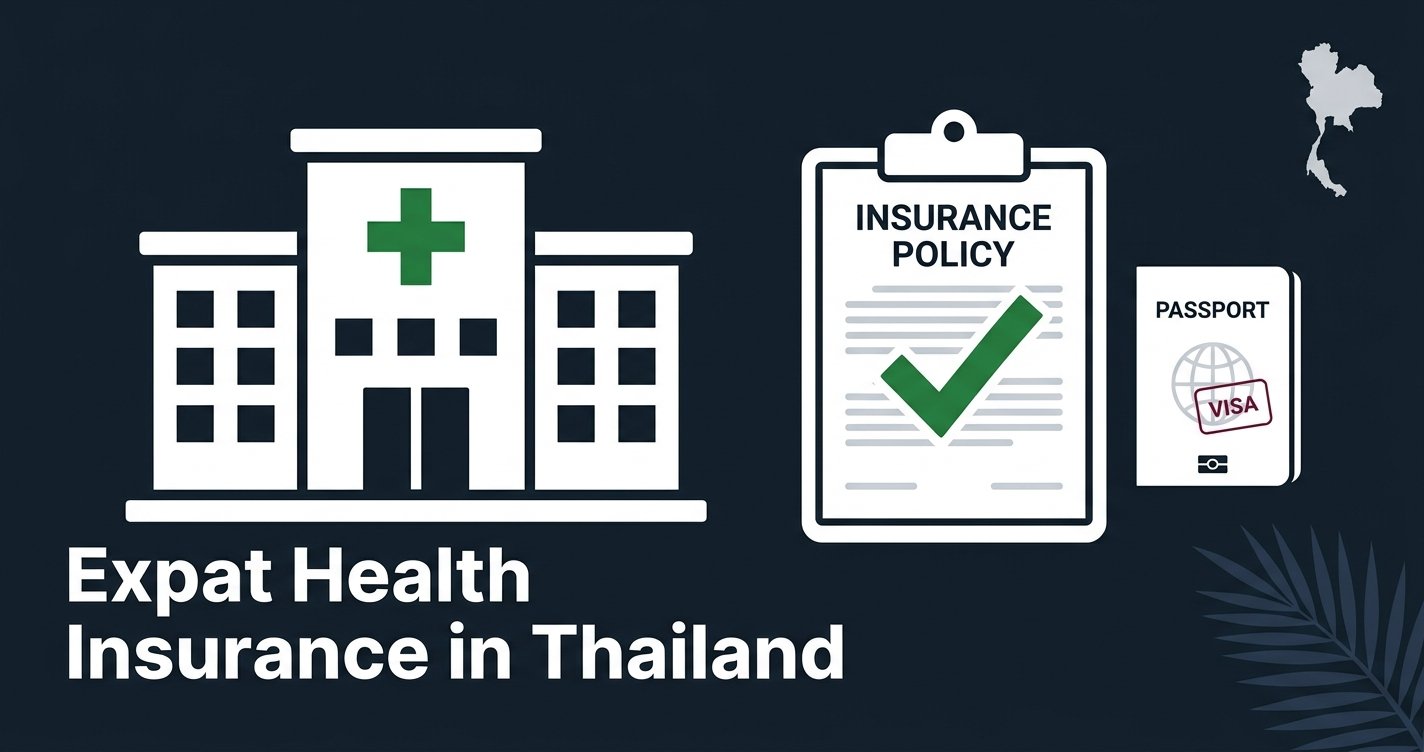
Expat Health Insurance in Thailand: Visa Rules and Options (2026)
Thailand has some of the best private hospitals in Asia, but treatment is expensive without cover, and your home country’s public system stops covering you once you move. That makes expat health insurance in Thailand one of the first decisions to get right, whether you are retiring to Hua Hin, working remotely from Chiang Mai, or spending the winter in Pattaya.
The rules are also confusing. Some Thai visas require a specific type of policy, others require nothing at all, and travel insurance is often mistaken for the real thing.
This guide explains which visas require insurance, the difference between travel, international, and Thai local cover, and where a nomad policy such as SafetyWing fits. This is general information, not financial or immigration advice, so always confirm current rules with the Thai embassy or an insurance broker.
Do You Need Expat Health Insurance in Thailand?
Legally, it depends on your visa. Practically, almost everyone living in Thailand should have cover, because a serious illness or accident at a private hospital can cost more than many people can pay out of pocket.
Public hospitals are much cheaper, but waiting times are longer and English is not always spoken. Most foreigners use private hospitals in Bangkok, Pattaya, Phuket, and Chiang Mai, which is why expat health insurance in Thailand matters even when your visa does not require it.
The UK Government’s living in Thailand guidance is a good example of official advice for residents. It makes clear that healthcare from home does not follow you, so private cover is the sensible default.
Which Thai Visas Require Health Insurance?
Non-Immigrant O-A (long stay, applied from abroad). Insurance is mandatory. According to the Thai General Insurance Association guidelines for the O-A visa, the policy must provide at least 100,000 US dollars or 3 million baht of cover, and foreign insurers can be accepted with a certificate signed by the insurer.
Non-Immigrant O-X (ten-year retirement). Insurance is mandatory and is generally expected to come from a Thai insurer, with minimum inpatient and outpatient limits. Check the exact current requirements before applying.
Retirement extensions applied for inside Thailand. Extensions of stay based on retirement, usually on a Non-O visa, do not currently carry a mandatory insurance requirement. Cover is still strongly advisable.
Tourist stays, the Destination Thailand Visa, and other visas. Standard tourist entries and many other visa types do not require health insurance as a condition of entry. Rules change, so check the current position for your visa before you travel.
Travel Insurance vs Expat Health Insurance in Thailand
These are not the same thing, and mixing them up is the most common mistake. Understanding the difference saves both money and unpleasant surprises.
Travel insurance covers emergencies during a trip, such as an accident, a sudden illness, or a flight home. It usually excludes routine care and chronic conditions, and it is not accepted for long-stay visa requirements.
International health insurance works like private health cover at home, including hospital stays, specialists, and often outpatient care in many countries. This is what most long-term residents mean by expat health insurance in Thailand.
Thai local health insurance is sold by Thai insurers, covers treatment in Thailand, and is generally what the O-X visa expects. It is often cheaper than international cover but usually has lower limits and stricter age rules.
Where SafetyWing Fits
SafetyWing is designed for digital nomads and long-term travellers rather than retirees applying for a Thai long-stay visa. It is a flexible monthly subscription that you can start and stop, which suits people who move between countries.
Nomad Insurance Essential is travel medical insurance. It covers emergencies and unexpected illness while you are away, and it suits nomads, Destination Thailand Visa holders, and people spending a few months in Thailand.
Nomad Insurance Complete is broader health cover that includes more routine care. It suits long-term nomads who want something closer to full health insurance without committing to a traditional annual policy.
Be clear on one point. SafetyWing is not the product to buy if you need an insurance certificate for an O-A or O-X visa application, because those visas have specific certificate and insurer requirements. Our SafetyWing review explains what each plan covers in detail.
SafetyWing for Nomads and Long Stays in Thailand
Essential covers travel medical emergencies. Complete adds broader health cover for long-term nomads. Monthly subscription, cancel anytime, no fixed address required.
Expat Health Insurance in Thailand for Retirees
Retirees face the strictest rules and the highest premiums. If you are applying for an O-A visa from abroad, you need a policy that meets the minimum cover for the whole stay and an insurer willing to sign the official certificate.
Many international insurers issue this certificate, and Thai insurers sell dedicated long-stay policies listed through the Thai General Insurance Association. Ask for the certificate before you buy, not after.
Age matters too. Premiums rise sharply after 60 or 65, some insurers stop accepting new customers at a certain age, and pre-existing conditions are often excluded. Retirees planning expat health insurance in Thailand should compare quotes well before the move.
Expat Health Insurance in Thailand for Digital Nomads
Most digital nomads in Bangkok and Chiang Mai arrive on tourist entries or the Destination Thailand Visa. Neither currently requires insurance for entry, but going without is a real financial risk.
A monthly nomad policy is usually the most practical choice. It moves with you when you spend a few months in Vietnam or Bali, and you can pause it when you return home.
For a wider comparison of long-term options, see our guide to travel insurance for long-term expats. If you work remotely, our guide to the best VPN for digital nomads in Bangkok covers the security side of working from cafes and coworking spaces.
Private Hospitals and Expat Health Insurance in Thailand
Thailand’s large private hospital groups operate in every city where expats live, from Bangkok and Pattaya to Phuket, Hua Hin, and Chiang Mai. Staff often speak English, and many hospitals have international patient departments that help with insurance paperwork.
Many private hospitals ask for a deposit or proof of cover before admission. A policy with direct billing avoids paying a large sum upfront and claiming it back later.
Before you choose a policy, check which hospitals near your home accept it directly. This single detail often matters more in daily life than the headline cover amount.
What to Check Before You Buy
- Visa requirement. Confirm whether your visa needs insurance, the minimum cover, and whether a Thai insurer is required.
- Inpatient and outpatient limits. Some policies cover only hospital stays, which leaves doctor visits and medicines uncovered.
- Direct billing. Check whether the insurer can pay the major private hospitals directly, so you do not pay large bills upfront.
- Pre-existing conditions. Most policies exclude them or apply waiting periods, so read this section carefully.
- Age limits and renewals. Check whether the policy can be renewed as you get older, and at what price.
- Evacuation and repatriation. Useful if you live on an island or want treatment at home for a serious condition.
Managing Your Insurance Online From Thailand
Most insurers now handle claims, documents, and policy changes through an app or online portal. Some of these portals flag logins from unfamiliar countries or ask for extra verification, as our guide to health insurance portals abroad explains.
Medical documents and claim forms contain sensitive personal data. Submitting them over hotel, condo, or cafe WiFi without protection is a real risk, and a VPN encrypts that connection.
A VPN is legal in Thailand, as our guide on whether a VPN is legal in Thailand explains. Our guide to the best VPN for expats in Thailand compares the options.
Common Mistakes With Expat Health Insurance in Thailand
Relying on a credit card’s travel cover. Card cover usually applies only to short trips and stops after a set number of days abroad.
Buying travel insurance for a long-stay visa. Immigration offices and embassies reject it for visas that require long-stay health insurance.
Waiting until you are older. The cheapest time to buy expat health insurance in Thailand is before age limits and health changes narrow your options.
Not declaring your country of residence. If an insurer believes you live somewhere else, a claim can be refused, so always state that you live in Thailand.
Other Money Matters for Expats in Thailand
Insurance premiums, hospital deposits, and visa proof of funds all involve moving money into Thai baht. Transfers through a traditional bank can be expensive, and our Wise for expats guide explains a cheaper option.
British and German expats will find country-specific help in our British expat in Thailand guide and our VPN für Deutsche in Thailand guide. Retirees should also read our retiring to Thailand VPN guide.
Official health and safety advice for travellers is also available in the FCDO travel advice for Thailand, which is updated regularly.
Frequently Asked Questions: Expat Health Insurance in Thailand
Is health insurance mandatory for expats in Thailand?
It depends on the visa. The O-A and O-X long-stay visas require health insurance, while tourist entries, retirement extensions applied for inside Thailand, and many other visas do not. Cover is strongly advisable either way because private hospital treatment is expensive.
How much cover does the O-A visa require?
According to the Thai General Insurance Association guidelines, the O-A visa requires at least 100,000 US dollars or 3 million baht of cover for the whole stay, with a certificate signed by the insurer. Confirm the current rules with the Thai embassy before applying.
Is SafetyWing accepted for a Thai retirement visa?
SafetyWing is designed for nomads and long-term travellers, not for O-A or O-X visa certificates, which have specific requirements. It suits digital nomads, Destination Thailand Visa holders, and people on shorter stays.
Is travel insurance enough for living in Thailand?
Travel insurance covers emergencies on a trip but usually excludes routine and ongoing care, and it is not accepted for long-stay visas. Long-term residents usually need international or Thai local health insurance.
Can I manage my insurance online from Thailand?
Yes. Most insurers offer apps or portals, but some flag foreign logins. Use a VPN on public WiFi when sending medical documents, and see our guide to health insurance portals abroad if you have access problems.
Related Guides
- SafetyWing Review for Digital Nomads
- Travel Insurance for Long-Term Expats
- Best VPN for Expats in Thailand
- Retiring to Thailand VPN Guide
- British Expat in Thailand VPN Guide
- Is VPN Legal in Thailand?
Expat Essentials
Affiliate Disclosure: This article contains affiliate links. If you buy through our links, we may earn a commission at no additional cost to you. This article provides general information, not financial, insurance, or immigration advice.