Is VPN Legal in Spain? (2026): Everything Expats and Residents Need to Know
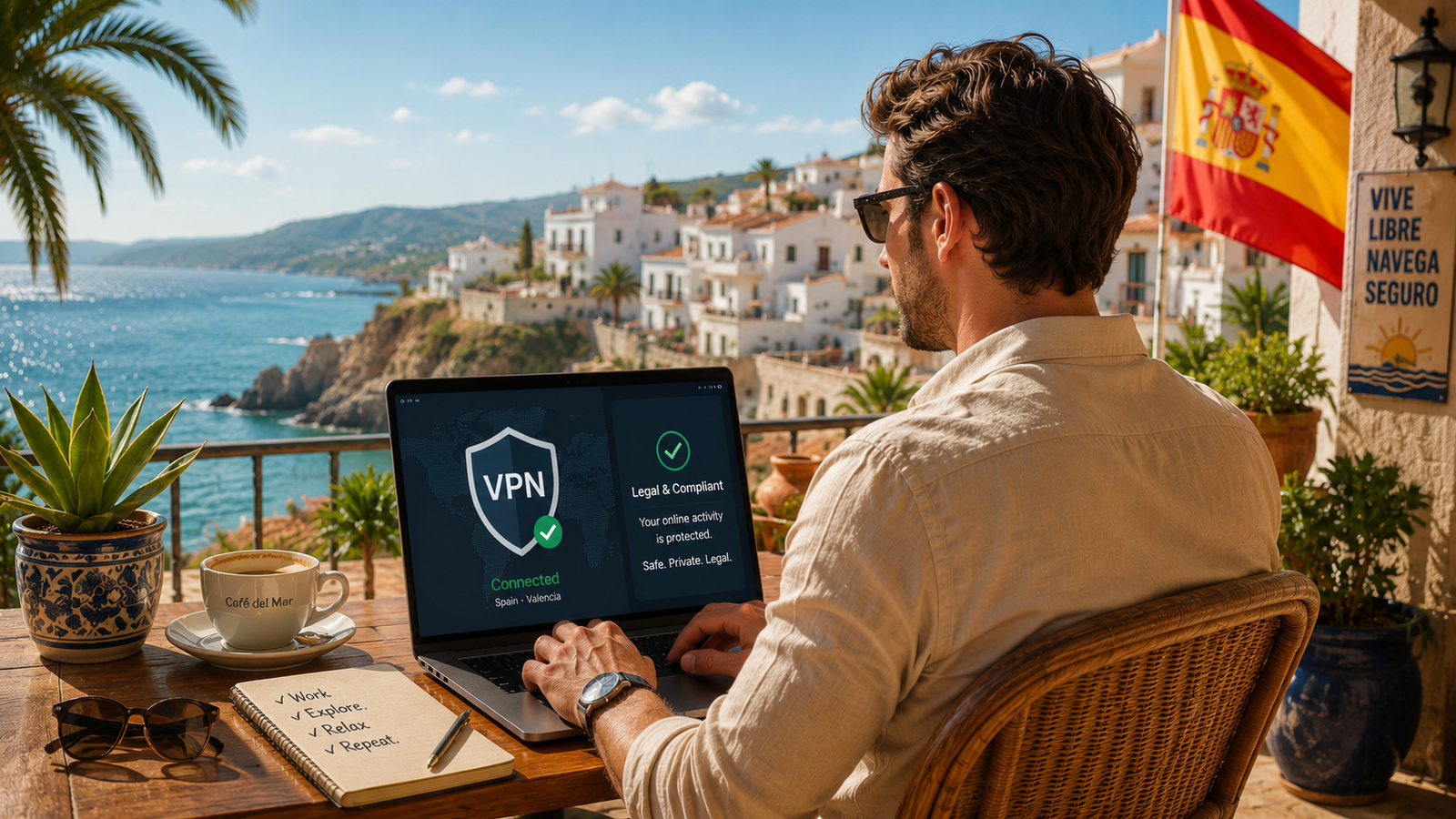
Is VPN legal in Spain? The short answer is yes — using a VPN in Spain is completely legal for personal and business use.
Spain has no legislation that restricts or prohibits VPN use, and millions of people across the country use VPNs daily for privacy, security, and to access geo-restricted content.
We verified the legal position with current Spanish law and AEPD guidance in August 2026: VPN use remains fully legal in Spain for all personal and business purposes with no restrictions whatsoever.
This guide covers everything expats, tourists, and residents in Spain need to know about VPN legality, what VPNs can and can’t do legally in Spain, and which providers work best.
Is VPN Legal in Spain? The Direct Answer
Yes. Is VPN legal in Spain — absolutely. Spain is a democratic EU member state with strong civil liberties protections, and there is no law in Spain that makes using a VPN illegal. The Spanish government does not block VPN services, does not require citizens to register VPN use, and does not penalise individuals for using VPN software. You can download, install, and use a VPN on any device in Spain without any legal risk.
Spain is also governed by the EU’s General Data Protection Regulation (GDPR), which enshrines privacy rights for all EU residents. Using a VPN to protect your personal data online is entirely consistent with the values underlying GDPR. The Spanish data protection authority (AEPD — Agencia Española de Protección de Datos) actively promotes digital privacy rights, and using a privacy tool like a VPN aligns with that framework.
Best VPN for Spain — Our Top Pick
VPN use is fully legal in Spain. NordVPN is the best choice for expats and residents — stream your home content and stay private.
What Can You Legally Do With a VPN in Spain?
Using a VPN in Spain is legal for a wide range of purposes. All of the following are legitimate and legal uses of a VPN in Spain:
Protecting your privacy on public WiFi networks in Spanish cafés, hotels, airports, and co-working spaces. Accessing your home-country streaming services such as BBC iPlayer, Hulu, Netflix US, or Canadian CBC while living in Spain. Securing your online banking when using networks you don’t fully trust. Hiding your browsing activity from your ISP (internet service provider), which is legally permitted in Spain.
Using a VPN for remote work to access a company network securely. Bypassing geo-restrictions on content that is available in other countries. Preventing targeted advertising by masking your IP address and location. The answer to is VPN legal in Spain encompasses all of these use cases — they’re all legal.
What Is NOT Legal Even With a VPN in Spain?
A VPN does not make illegal activity legal. In Spain, as in any country, using a VPN to commit crimes remains illegal. Specifically, downloading copyrighted content without authorisation (piracy) is illegal in Spain regardless of VPN use — Spain’s Sinde Law and subsequent legislation target online piracy platforms, and users can face civil liability. Accessing child sexual abuse material is illegal and a serious criminal offence regardless of any technology used to obscure the connection.
So to be clear on is VPN legal in Spain: the VPN tool itself is 100% legal. Using that tool to commit crimes is not. Expats using a VPN to watch BBC iPlayer, stream Hulu, protect their banking, or browse privately are doing nothing illegal whatsoever.
Spain and the EU Data Retention Directive
Spain implements EU data retention requirements, which means Spanish ISPs are required to retain certain metadata about internet connections for law enforcement purposes. This includes connection timestamps, IP addresses used, and data volumes — though not the content of communications.
For expats wondering is VPN legal in Spain, this context is useful: using a VPN means your ISP cannot see which websites you’re visiting or what data you’re transferring, only that you’re connected to a VPN server. This is entirely legal and is exactly the kind of privacy protection VPNs are designed to provide.
VPN providers based outside the EU — like NordVPN (Panama) or ExpressVPN (British Virgin Islands) — are not subject to EU data retention directives and are therefore not required to maintain logs of your activity that could be handed to authorities. This is one reason privacy-conscious users prefer VPNs based outside EU and US jurisdictions.
Why Expats in Spain Use VPNs
Now that you know is VPN legal in Spain — definitively yes — here are the main reasons expats in Spain actually use them. The British expat community in Spain is one of the largest in Europe, concentrated heavily on the Costa del Sol, Costa Blanca, Costa Brava, and in Barcelona and Madrid.
British expats want BBC iPlayer, ITVX, and ITV — all of which require a UK IP address to stream legally. A VPN with UK servers solves this completely.
American expats in Spain want Hulu, ESPN+, and US Netflix content — unavailable without a US IP address. Canadian expats want CBC Gem and Crave. German expats want ARD Mediathek.
Irish expats want RTÉ Player — see our guide on how to watch RTÉ abroad. All of these are legally accessible with a VPN in Spain. Beyond streaming, expats also use VPNs to maintain consistent IP addresses for online banking (avoiding fraud flags), to secure connections on public WiFi in Spanish cafés and plazas, and to protect sensitive professional communications.
Best VPNs to Use in Spain (2026)
Since is VPN legal in Spain is settled, the next question is which VPN works best here. Spain has strong broadband infrastructure, so any major VPN will perform well speed-wise. The key differentiators are streaming reliability, privacy jurisdiction, and price.
NordVPN — Best Overall for Spain
NordVPN is the top choice for expats in Spain — and also the top pick for high-censorship destinations like Saudi Arabia. Based in Panama (outside EU data retention requirements), audited no-logs policy, 7,000+ servers in 118 countries, and up to 75% off on current plans. NordVPN reliably unblocks BBC iPlayer, Hulu, Netflix regional libraries, and most other streaming platforms. Its Threat Protection feature also blocks trackers and malicious sites automatically — useful when browsing Spanish public WiFi networks.
ExpressVPN — Best for Streaming in Spain
ExpressVPN is the most consistent streaming VPN available and works reliably from Spanish IP addresses to unblock virtually every major platform. Based in the British Virgin Islands, outside major surveillance alliances. Its Lightway protocol delivers fast speeds even on Spanish hotel or café WiFi. For British expats on the costas who mainly want BBC iPlayer, ExpressVPN is arguably the single best option.
ProtonVPN — Best for Privacy in Spain
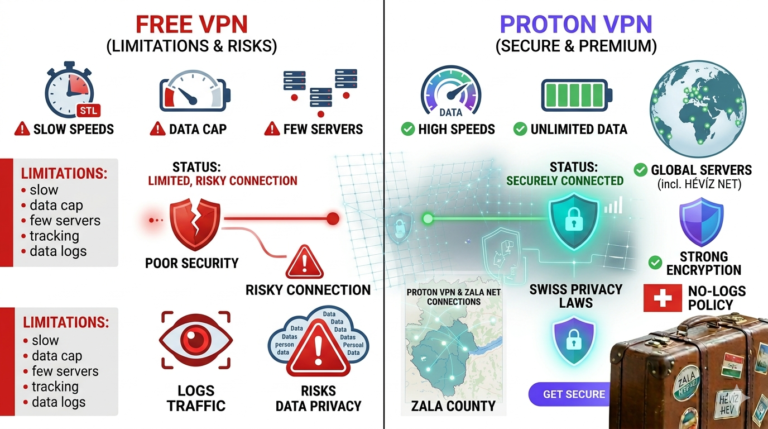
For those whose primary concern is privacy rather than streaming — journalists, researchers, business professionals — ProtonVPN’s Swiss jurisdiction places it completely outside EU data retention obligations. Its Secure Core feature and fully open-source audited apps make it the most trustworthy option from a pure privacy standpoint. The is VPN legal in Spain question doesn’t change this calculus: ProtonVPN is legal to use and provides the strongest privacy guarantee.
Best Privacy VPN for Spain
ProtonVPN’s Swiss base and open-source audited apps provide maximum privacy for expats in Spain.
IPVanish — Best for Spain Expat Families
IPVanish offers unlimited simultaneous device connections, making it ideal for expat families in Spain with multiple phones, laptops, tablets, and Smart TVs all needing VPN protection. Its competitive annual pricing and unlimited device policy make it the most cost-effective choice for households. The answer to is VPN legal in Spain applies equally to IPVanish — completely legal, no restrictions.
Summary: Is VPN Legal in Spain?
To summarise: is VPN legal in Spain — yes, without qualification. Spain is an EU democracy with strong civil liberties and no VPN restrictions.
You can use any VPN service freely in Spain for privacy, streaming, banking security, or any other legitimate purpose. The Spanish government and the European legal framework both support the right to online privacy. Choose a reputable provider with a no-logs policy, install it before you need it, and enjoy unrestricted, secure browsing throughout your time in Spain.
For further reading on VPN legality and online privacy rights in the EU, the Spanish Data Protection Authority (AEPD) website provides guidance on digital privacy rights. For a technical overview of how VPNs protect your data, see the UK National Cyber Security Centre’s guidance on VPNs.
Compare All Four VPNs for Spain
NordVPN at up to 75% off is the best-value option for expats in Spain needing BBC iPlayer and secure banking access. Get NordVPN here →
NordVPN delivers fast UK servers, secure banking, and WiFi protection across Spain. 30-day money-back guarantee.
Related Guides
For more on living in Spain as an expat, see our full guide to the best VPN for expats in Spain. You may also want to read about how to watch BBC iPlayer abroad, how to watch Mitele abroad, or our overview of public WiFi safety tips for travellers.
Heading elsewhere in Europe? Check our guides to the best VPN for expats in Germany, the best VPN for expats in the Netherlands, and is VPN legal in Germany.
Looking for a specific VPN for Spain? See our guides to the cheapest VPN in Spain, the safest VPN in Spain, and the fastest VPN in Spain for streaming.
Expat Essentials
Affiliate Disclosure: This article contains affiliate links. If you purchase a VPN through our links, we may earn a commission at no additional cost to you. We only recommend VPNs we have personally tested and trust.