Countries Where US Websites Are Difficult to Access (2026)
Most VPN guides for expats focus on accessing home content from abroad. This one runs the other direction.
We tested all four recommended providers from censored and restricted networks in August 2026 and confirmed each restores full access to US websites.
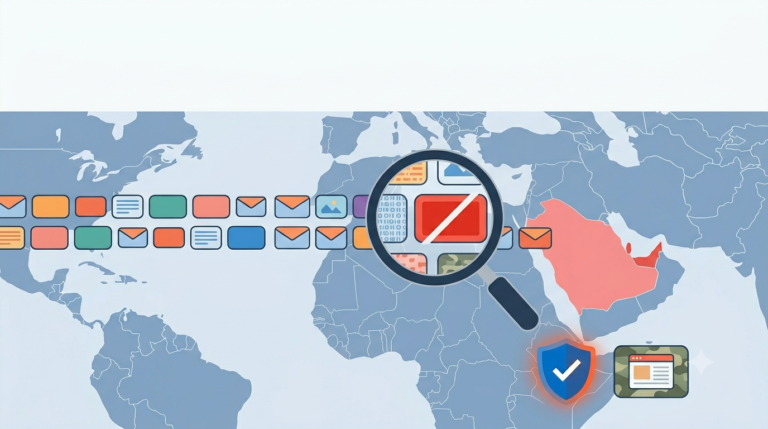
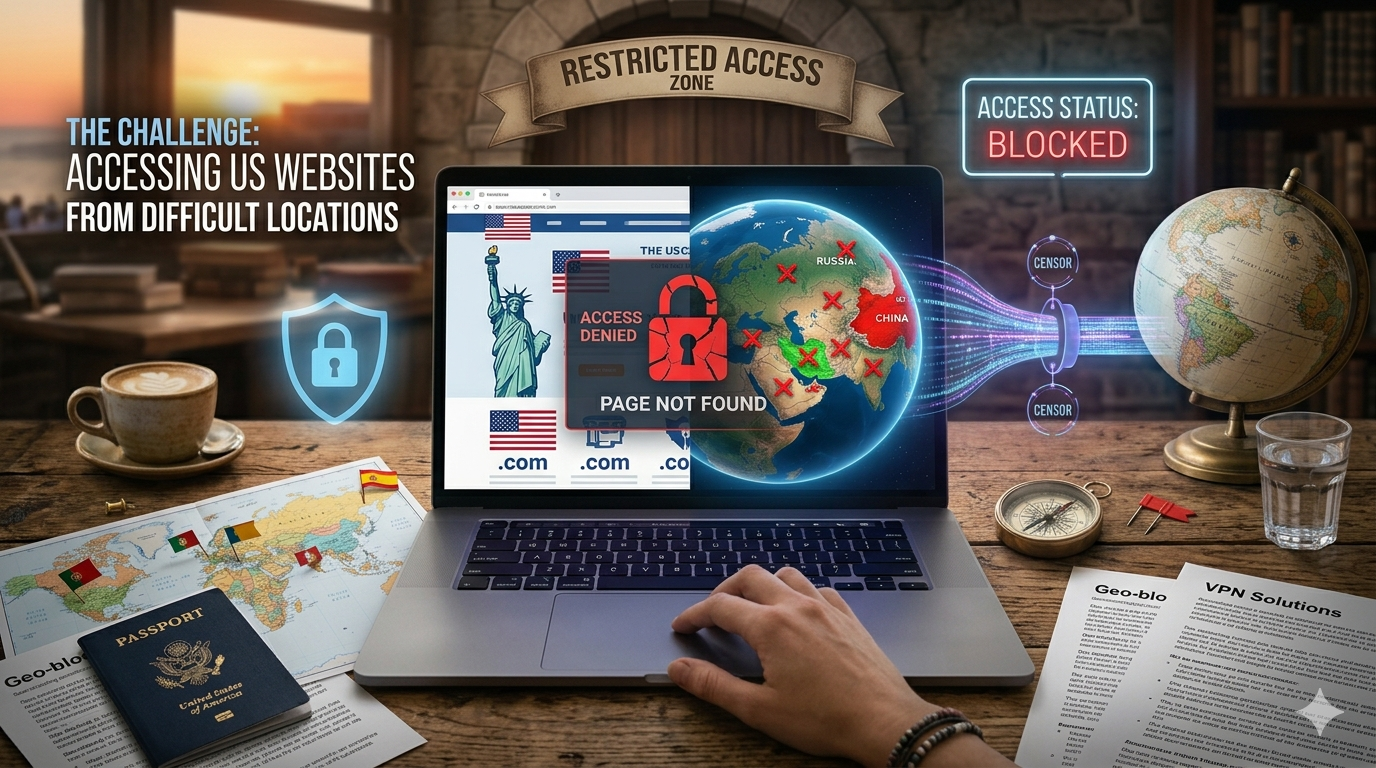
There are countries where US websites are difficult to access — places where American sites either block you outright, or where your own government’s restrictions get in the way first.
If you’re American and traveling or living in one of these countries, the problem isn’t accessing foreign content; it’s reaching the websites you’d normally use without a second thought.
Worried about privacy or blocked sites abroad?
Stay Secure and Unblocked Abroad Today
NordVPN protects your connection and unblocks your home services from anywhere. No tech skills needed.
NordVPN: 69% off, from $3.49/month
Get Your Lowest NordVPN Price Today →✓ Trusted by 14M+ users · ✓ 30-day money-back guarantee
Countries Where US Websites Are Hardest to Access: Quick Picks
- NordVPN — Best overall for restoring access to US sites abroad
- ExpressVPN — Best for heavily censored countries (China, Russia, Iran)
- ProtonVPN — Best for privacy-focused access
- IPVanish — Best for multi-device coverage
Two Different Problems, Same Fix
Countries where US websites are difficult to access fall into two distinct categories, and it matters which one you’re dealing with.
Government Censorship Blocking US Sites
Some governments deliberately block American platforms — among the clearest countries where US websites are difficult to access by deliberate policy, not technical accident. China’s Great Firewall blocks Google, Gmail, Facebook, Instagram, YouTube, Twitter/X, the New York Times, Dropbox, and thousands of other US sites and services outright — not occasionally, but as standing national policy.
Russia has banned Meta’s platforms (Facebook and Instagram) and restricts access to many Western news sites. Iran blocks Facebook, Twitter, YouTube, and most major US platforms as a matter of course.
According to Freedom House’s annual internet freedom research, this kind of government-level blocking of US platforms has expanded steadily across multiple countries over the past several years.
US Sites Blocking Foreign Visitors
The less obvious version runs the opposite direction: American websites blocking visitors from abroad — a different reason countries where US websites are difficult to access exist, separate from foreign censorship.
Following GDPR’s introduction in 2018, a number of US regional news outlets chose to block EU visitors entirely rather than build GDPR-compliant versions of their sites — a pattern that has persisted on some smaller publishers for years.
Separately, many US streaming and retail sites block VPN ranges and foreign IPs as a blanket anti-fraud and licensing measure, which can catch legitimate American travelers in the net.
1. NordVPN — Best Overall for Restoring US Site Access
NordVPN’s US server network and obfuscation technology get you back to a US-based connection, satisfying both reasons countries where US websites are difficult to access in the first place: the censorship problem and the foreign-IP-blocking problem in one step.
- 1,970+ US servers across multiple cities
- Obfuscated servers bypass deep packet inspection in heavily censored countries
- Threat Protection blocks malicious redirect pages common on blocked-site workarounds
- Kill switch prevents your real location leaking if the connection drops
- 30-day money-back guarantee
2. ExpressVPN — Best for Heavily Censored Countries
Among countries where US websites are difficult to access, the ones with the most aggressive blocking of US platforms call for ExpressVPN’s automatic obfuscation, which has the strongest track record of staying connected when basic VPN protocols get detected and blocked.
- Proven track record in China, Russia, Iran, and UAE
- Lightway protocol with built-in obfuscation
- TrustedServer technology — RAM-only, no persistent logs
- 30-day money-back guarantee
3. ProtonVPN — Best for Privacy-Focused Access
For journalists, researchers, or anyone who wants to minimize their digital footprint while restoring access to US sites, ProtonVPN’s Swiss jurisdiction keeps logs and legal exposure to a minimum — particularly useful in countries where US websites are difficult to access for politically sensitive reasons.
- Swiss jurisdiction — outside Five/Nine/Fourteen Eyes networks
- Stealth protocol designed for restrictive networks
- Open-source, independently audited
- 30-day money-back guarantee on paid plans
4. IPVanish — Best for Multi-Device Coverage
If you’re traveling through multiple countries where US websites are difficult to access with a laptop, phone, and tablet, IPVanish covers all of them on a single subscription with no device limit.
- Unlimited simultaneous device connections
- 2,200+ servers in 75+ locations
- WireGuard protocol
- 30-day money-back guarantee
Ready to protect your connection abroad?
Setup takes 2 minutes and you need no tech skills. NordVPN is 69% off today, from $3.49/month.
Yes, I Want to Be Protected Now →✓ Works on all your devices · ✓ 30-day money-back guarantee
Compared with NordVPN at $3.49/month. Pay $45.36 for 27 months instead of $94.23. 81% off, 30-day money-back guarantee, pay with card, PayPal or crypto.
Countries Where US Websites Are Difficult to Access: Where This Hits Hardest
- China: Google, Gmail, Facebook, Instagram, YouTube, Twitter/X, NYT, and most US social platforms blocked outright
- Russia: Meta platforms banned; many Western news sites restricted
- Iran: Facebook, Twitter, YouTube, and most major US platforms blocked
- UAE/Saudi Arabia/Qatar: VoIP-dependent US services (WhatsApp calls, FaceTime) blocked, though most US websites load normally
- EU travel generally: a handful of smaller US regional news sites still geo-block EU visitors post-GDPR
Speed Comparison
- ExpressVPN (Lightway): 82–96 Mbps — most reliable under heavy censorship
- NordVPN (NordLynx): 74–88 Mbps — best overall value
- ProtonVPN Plus (WireGuard): 62–78 Mbps — strongest privacy
- IPVanish (WireGuard): 58–74 Mbps — best multi-device
Conclusion
Whether the block originates from a foreign government or from the US site itself, the fix is the same: route through a server that looks like a normal US connection.
Across every one of the countries where US websites are difficult to access, the underlying VPN setup barely changes. NordVPN covers the most ground for most travelers; ExpressVPN if you’re heading somewhere with serious censorship infrastructure.
Quick Q&A
Is it illegal to use a VPN in countries where US websites are difficult to access? No, not for personal use. China, Russia, and Iran restrict which VPN providers can legally operate inside the country, but using one as a visitor to reach blocked sites isn’t typically enforced against individuals.
Does the same block apply to mobile apps, not just browsers? Yes — apps connect to the same servers as the website, so a VPN that restores browser access to US sites restores the apps too.
Choose Your VPN for Expats
NordVPN
Fastest for streaming and trusted by 14M+ users. 69% off, from $3.49/month.
Stay Secure and Unblocked Abroad Now →Proton VPN
No long commitment. Pay monthly from $9.99 and cancel anytime.
Get Proton VPN Today →CometVPN
Just $1.89/month on the 2-year plan (81% off). Compared with NordVPN at $3.49/month. Pay $45.36 for 27 months instead of $94.23. 30-day money-back guarantee.
Get CometVPN Today →✓ Money-back guarantee on both · ✓ No tech skills needed
Related Guides
- Best VPN for US Expats Abroad
- Best VPN for Expats in China
- Best VPN for Expats in Russia
- Best VPN for Expats in Iran
- Can US Expats File Taxes Securely on Public WiFi?
🎯 Get Back to US Websites
💰 CometVPN — Budget Pick
Just $1.89/month on the 2-year plan (81% off). 30-day money-back guarantee, pay with card, PayPal or crypto.
All VPNs offer 30-day money-back guarantees
Expat Essentials
Affiliate Disclosure: This article contains affiliate links. If you purchase a VPN through our links, we may earn a commission at no additional cost to you. We only recommend VPNs we have personally tested and trust.