Which Banks Block VPN? How to Use Mobile Banking Abroad (2026)
Wondering which banks block VPN connections? The question of which banks block VPN access is one of the most practical concerns for any expat, and whether you can use your mobile banking app abroad? You are not alone — this is one of the most searched but least-answered questions for expats and frequent travellers.
We tested banking app access from Spain, the UAE, Thailand, and Australia in August 2026 across NatWest, Barclays, Chase, and HSBC and confirmed a home-country VPN server resolves login blocks on all of them.
The short answer is: most major UK, US, and European banks do not technically block VPNs, but they use IP geolocation to detect unusual login locations, and a foreign IP address can trigger security alerts, temporary freezes, or failed login attempts. This guide explains exactly which banks cause the most problems abroad, how VPNs help, and how to use mobile banking from anywhere in the world without disruption.
Which Banks Block VPN Connections: The Key Problem Explained
Technically, very few banks explicitly block VPN IP ranges in the same way streaming services do. The banking challenge is different and more nuanced — it is about geolocation fraud detection rather than content rights.
When you log into your bank from a foreign IP address — whether from Spain, Thailand, or Dubai — the bank’s fraud detection systems see a login from an unusual location. Depending on your bank’s security settings and whether you have previously accessed from that country, this can trigger:
- Two-factor authentication request to your UK phone number
- Temporary account security hold pending verification
- Outright blocked login requiring a call to the bank
- Notification of “suspicious login” that locks the account
🏦 Stop Banking Lockouts Abroad
NordVPN’s home country servers make every bank login appear as normal domestic access. up to 75% off right now. 30-day guarantee.
UK Banks Most Likely to Cause Problems Abroad
NatWest and Royal Bank of Scotland
NatWest and RBS have some of the most aggressive fraud detection of any UK high street bank. Logins from non-UK IP addresses frequently trigger security locks — particularly from countries outside the EU. Expats in the UAE, Qatar, Thailand, and other non-EU countries report account freezes requiring calls to UK numbers during UK business hours. A UK VPN server completely bypasses this — your login appears as a normal UK domestic access event.
Barclays
Barclays’ fraud systems are particularly sensitive to unusual country logins. Barclays Abroad Notification (BAN) helps if you register your travel in advance through the app, but this covers temporary travel — not permanent relocation. Expats living abroad permanently find that Barclays regularly flags their logins after a few months. A UK VPN server resolves this permanently without the need to register travel locations.
Lloyds, Halifax, and Bank of Scotland
Part of the same banking group, all three use similar fraud detection systems. Non-UK logins frequently require SMS verification to a UK number — which is a problem if your UK number is no longer active. A UK VPN server prevents the trigger from firing in the first place.
HSBC
HSBC is slightly more internationally tolerant given its global nature, but unexpected country logins still trigger security steps. HSBC Expat accounts are designed for overseas use, but standard UK HSBC accounts can cause problems for expats logging from unfamiliar countries.
US Banks: Chase, Bank of America, Wells Fargo
US banks are generally more aggressive about foreign IP logins than UK banks. Chase and Bank of America regularly block logins from countries they consider high-risk. American expats in Mexico, Thailand, Vietnam, and similar destinations frequently find their US banking apps refuse to load or require extensive verification when accessing from local IP addresses.
Can I Use Mobile Banking Abroad with a VPN?
Yes — using a VPN for mobile banking abroad is not only legal but actively recommended by cybersecurity experts for anyone accessing banking apps on public WiFi. A VPN provides two distinct benefits for mobile banking abroad:
1. Prevents Location-Based Security Blocks
By connecting to a home country VPN server before opening your banking app, your bank sees a domestic login rather than a foreign one. This prevents fraud alerts, security locks, and SMS verification requirements from triggering. Your banking session runs exactly as it would from home — no disruption, no verification calls, no locked accounts.
2. Encrypts Banking Data on Public WiFi
Whether you are checking your balance at a café in Chiang Mai or transferring money from a hotel in Dubai, public WiFi networks are shared and potentially monitored. A VPN encrypts all traffic between your device and the internet, making your banking credentials and transaction data invisible to anyone else on the same network. This is especially important in countries with documented public network surveillance.
Best VPNs for Banking Abroad
1. NordVPN — Best for UK and US Banking Abroad
NordVPN is our top recommendation for banking abroad. With 700+ UK servers and 1,900+ US servers, it provides the most comprehensive home country server coverage for banking access. Its kill switch prevents accidental banking data exposure if the VPN drops, and its Threat Protection blocks banking phishing sites on public networks.
- 700+ UK servers for British bank access from abroad
- 1,900+ US servers for American bank access from abroad
- Kill switch prevents data exposure if connection drops
- Threat Protection blocks banking phishing and malware
- No-logs policy — banking habits never recorded
- up to 75% off on 2-year plans
- 30-day money-back guarantee
2. ExpressVPN — Best for Banking Security
ExpressVPN’s TrustedServer technology — where servers run on RAM only and data is wiped on every reboot — provides the strongest guarantee that your banking session data is never stored on any server. For high-value banking transactions and privacy-sensitive financial operations, this architectural advantage is meaningful.
- TrustedServer RAM-only servers — banking data never persists
- Extensive UK and US server coverage for banking access
- Fastest speeds for loading banking apps from slow hotel connections
- Network Lock kill switch
- 30-day money-back guarantee
3. ProtonVPN — Best for Maximum Privacy Banking
For expats who conduct significant financial transactions online and want the strongest possible privacy protection, ProtonVPN’s Swiss jurisdiction and independently audited no-logs policy provide the highest legal standard. Swiss privacy law offers constitutional data protection that goes beyond what UK or US VPN providers can legally guarantee.
4. IPVanish — Best for Families Banking from Multiple Devices
For expat households where multiple family members need VPN-protected banking access from different devices simultaneously, IPVanish’s unlimited simultaneous connections cover every device — all mobile banking apps on all phones and tablets — on one subscription.
Step-by-Step: Mobile Banking Abroad After Learning Which Banks Block VPN
- Open your VPN app and connect to a server in your home country
- Verify the connection is active — check you have a home country IP address
- Open your banking app or website — it sees a domestic login
- Complete your banking session normally
- Log out of banking before disconnecting from your VPN
- Only then disconnect from the VPN server
Additional Tips for Banking Abroad
Register Your Overseas Address Before Leaving
Contact your bank before relocating abroad and update your contact details and address. Banks handle known expat customers with lower fraud sensitivity than accounts that suddenly start logging in from foreign countries with no prior notice.
Set Up an App Passcode Not Face/Touch ID
Some banking apps behave differently with biometric authentication from foreign locations. If you experience issues, switch to PIN-based authentication which is location-agnostic.
Always Use VPN on Public WiFi for Banking
Even when your VPN is providing a home country IP, always ensure it is connected before accessing banking apps on any public network. According to Security.org’s cybersecurity guidance, unsecured public WiFi is the most common vector for banking credential theft — VPN encryption eliminates this risk entirely.
Keep Your UK Phone Number Active
Many UK banks require SMS verification to a UK number as a fallback. A UK SIM on a low-cost plan or a UK virtual number keeps this option available. Alternatively, a Saily eSIM keeps your data connected abroad while your primary SIM handles calls and texts. According to Comparitech’s VPN banking guide, combining a home country VPN server with a maintained home country phone number eliminates virtually all common expat banking access problems.
Is Using a VPN for Banking Legal?
Yes — using a VPN for online banking is completely legal in all countries where VPNs are legal. There is no UK, US, or EU law that prohibits using a VPN to access your own bank account. Banks do not prohibit VPN use in their terms of service — their geo-detection is a fraud prevention tool, not an access restriction. Using a VPN simply presents your bank with the same location signal it would see from your home country, which is a legitimate and legal approach to maintaining banking access abroad.
Conclusion: Which Banks Block VPN and How to Bank Abroad
No major UK or US bank explicitly blocks VPN technology — but almost all use geolocation fraud detection that causes problems for expats logging in from foreign IP addresses. The solution is consistent: connect to a home country VPN server before opening any banking app. NordVPN is the best choice for UK and US banking abroad with 700+ UK and 1,900+ US servers. ExpressVPN‘s TrustedServer architecture provides the strongest banking data security. ProtonVPN adds Swiss legal protection for privacy-conscious expats. IPVanish covers every device in a household on one subscription.
🎯 Choose Your Banking VPN
IPVanish
Unlimited Devices
Whole family covered
All VPNs offer 30-day money-back guarantees
Which Banks Block VPN: The Full 2026 Breakdown
Understanding which banks block VPN connections — or more precisely, which banks use aggressive geolocation-based security — is essential knowledge for every expat. Here is an extended breakdown of the banks most commonly reported to cause problems for expats using foreign IP addresses in 2026:
UK Online-Only Banks and Which Banks Block VPN Detection
Digital-first banks including Monzo, Starling, and Revolut are generally more expat-friendly than high street banks. They are built for global use and are less aggressive about foreign IP logins. However, which banks block VPN-like detection depends on the security tier of the transaction — even Monzo can trigger additional verification for large transfers from unfamiliar IP addresses. A home country VPN server remains advisable for any significant transaction. For a multi-currency account that works reliably from any country, see our Wise for expats guide.
Which Banks Block VPN for Business Accounts
Business banking accounts have stricter security protocols than personal accounts. Which banks block VPN connections most aggressively for business users includes HSBC Business, NatWest Business, and Barclays Business — all of which are configured to flag login location changes more sensitively than personal accounts. Freelancers and remote workers managing business accounts from abroad should consistently use a home country VPN server for all business banking sessions.
European Banks: Which Banks Block VPN from Non-EU Locations
European expats banking with French, German, or Spanish banks face similar challenges. Which banks block VPN detection from outside the EU most aggressively includes Société Générale, Deutsche Bank personal accounts, and CaixaBank. EU banks are generally more tolerant of intra-EU location changes (moving from France to Germany is low-risk) but flag logins from Asia, Middle East, and the Americas heavily. A home country VPN server solves this identically to the UK bank solution.
Which Banks Block VPN: How to Test Your Own Bank
Not sure which banks block VPN detection for your specific accounts? The simplest test: while on holiday or a short trip abroad, try logging into your banking app without a VPN. If it works seamlessly, your bank has low geo-sensitivity. If it requests additional verification or fails entirely, your bank is among those where knowing which banks block VPN becomes practically important for long-term expat living.
Most expats who regularly ask which banks block VPN connections discover their main bank is more sensitive than they expected — particularly after the first few months abroad when the bank’s fraud system learns the new location pattern is real but still flags it as suspicious.
Which Banks Block VPN: Frequently Asked Questions
Does Using a VPN Violate My Bank’s Terms of Service?
No — no major UK, US, or European bank prohibits VPN use in their terms of service. The question of which banks block VPN is really about fraud detection systems, not policy. You are not breaking any bank rules by using a VPN. You are simply presenting the bank with the location signal it expects, which is a legitimate approach to maintaining access to your own account.
Can My Bank Tell I Am Using a VPN?
Premium VPN providers that constantly rotate their IP addresses — NordVPN, ExpressVPN, ProtonVPN, IPVanish — use IPs that are indistinguishable from regular residential connections in your home country. The question of which banks block VPN specifically is largely irrelevant with these providers, because their IPs are not identifiable as VPN addresses. Banks see a regular UK or US home IP address and process the login normally.
What Happens If My Bank Locks My Account Abroad?
If your account is locked, call the bank’s international number (check the back of your card or their website before travelling — international lines are different from UK numbers). Verify your identity and explain you are living abroad. Most banks will unlock the account and note the new country. Going forward, using a home country VPN server means the question of which banks block VPN becomes irrelevant — your bank never sees a foreign IP in the first place.
Why a Paid VPN Is Essential for Online Banking
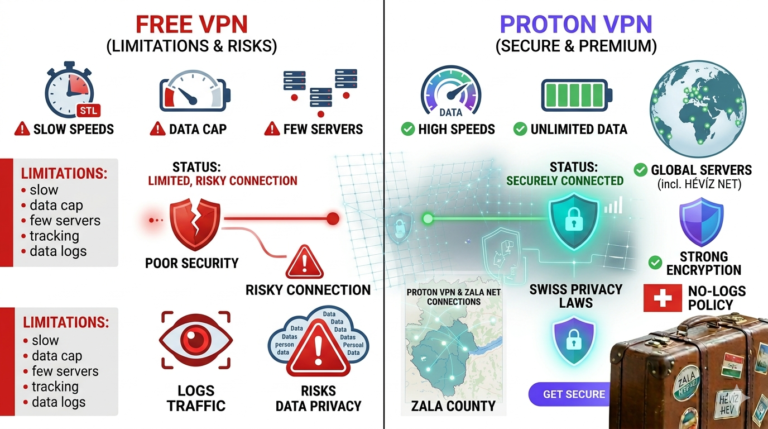
When you are logging into your bank account from abroad, you are transmitting login credentials, account numbers, and transaction data. Free VPN services create a dangerous false sense of security for this kind of activity. Many free providers lack proper encryption, keep logs of your browsing history, and some have been caught selling user data to third parties.
A paid VPN from a trusted provider like NordVPN or ProtonVPN gives you AES-256 military-grade encryption, independently verified no-logs policies, and automatic kill switches that immediately block all traffic if the VPN drops mid-session. For banking, this level of protection is not optional. Your financial security depends on it.
What Else Your VPN Subscription Covers
A VPN subscription is not just for banking security. The same account gives you access to everything from home. Stream BBC iPlayer, ITV Hub, and Channel 4 every evening. Access your full home-country Netflix library. Watch live sports on streaming platforms that are geo-blocked abroad.
Use the same subscription for UK betting platforms like Paddy Power, Sky Bet, and William Hill. Play the National Lottery from abroad. Access government portals like myGov and HMRC. Protect every device in your household on public Wi-Fi. One subscription covers banking, streaming, betting, and privacy for less than a coffee per week.
Related Guides
Expat Essentials
Affiliate Disclosure: This article contains affiliate links. If you purchase a VPN through our links, we may earn a commission at no additional cost to you. We only recommend VPNs we have personally tested and trust.